
Sometimes growth isn’t about doing more. It’s about understanding what’s getting in the way. ✨
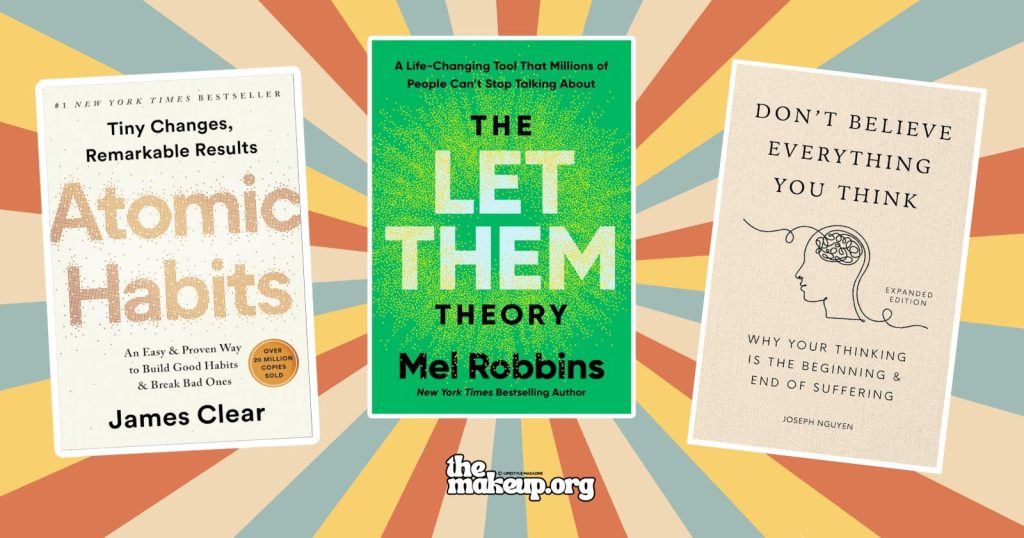
These books helped me during different versions of “stuck” — burnout, overthinking, people-pleasing, identity confusion, or just quietly drifting from who I want to be.
If you’re looking for books for self growth that are actually useful in the mess of real life, here’s what I’d recommend — with short insights, real-life examples, and practical takeaways. 👇
📘 1. Atomic Habits — James Clear
Best if: You’re stuck in a cycle of “starting over” and want to finally stay consistent.
This book teaches you the truth about change: It’s not about motivation — it’s about your system.

James Clear breaks it down. How habits work. How to design your space. How small wins build identity.
🧠 Key insight: You don’t rise to the level of your goals. You fall to the level of your systems.
🔁 Someone wants to journal daily. Instead of trying harder, they leave the notebook on their pillow. That cue makes it automatic.
🎯 Why it matters: Small habits rebuild self-trust.
✅ Pros: Clear, actionable, science-backed.
❌ Cons: Less emotional — more strategy, less soul.
💬 2. The Let Them Theory — Mel Robbins
Best if: You’re tired of being drained by other people’s reactions or expectations.
Mel’s message is short and sharp: Let them. Let them leave. Let them ghost. Let them think what they want.

You stop chasing. Explaining. Fixing. And you finally breathe.
🧠 Key insight: Not everything needs your energy.
💬 Someone over-edits texts to sound nicer. After this? They send it once. And protect their peace.
🎯 Why it matters: You stop performing for people who were never listening.
✅ Pros: Fast to read. Clear message. Emotionally freeing.
❌ Cons: Not deep — better for mindset resets than emotional work.
🧠 3. Don’t Believe Everything You Think — Joseph Nguyen
Best for: Overthinkers, anxious minds, and self-doubters.
Thoughts are not facts. And not every thought deserves your belief. 🧘♀️
Nguyen teaches how most of our suffering comes from mental noise — not actual life circumstances.

🌥️ Key lesson: Observe your thoughts like passing clouds — not commands.
☁️ Suppose someone wants to start a blog but hears “Who do you think you are?” After this book, they notice the thought, detach from it, and publish anyway.
✅ Pros: Short chapters. Spiritually grounded. Reassuring.
❌ Cons: Light on structure. More philosophical than practical.
🎯 4. Inner Excellence — Jim Murphy
Best for: High performers stuck in fear, pressure, or self-doubt.
Originally for athletes, this book is gold for anyone who wants to perform without panic. 💪
It teaches how to shift from pressure to presence — and how fear blocks your best work.

💭 Key lesson: Confidence isn’t built by winning. It’s built by trusting yourself in the middle of the mess.
🔊 Imagine someone dreading a speech. Instead of spiraling, they focus on breath, calm, and showing up with presence.
✅ Pros: Deep, practical, mindset reset.
❌ Cons: More serious tone. Assumes you’re already in a high-performance mindset.
💛 5. How to Love Better — Yung Pueblo
Best for: Healing attachment wounds, deepening connection, and softening inner walls.
This one’s tender and poetic. It connects emotional maturity to love — not just romance. 🌿
Yung Pueblo shows how emotional reactivity often comes from unprocessed pain. And how healing that pain improves every relationship.

🌱 Key lesson: The more self-awareness you build, the safer your relationships become.
🫶 Imagine someone who overgives in silence. They read this and realize: unspoken needs don’t disappear — they build resentment. So they speak up, gently.
✅ Pros: Poetic. Easy to digest. Reflective.
❌ Cons: Light on structure. Not for those wanting step-by-step guidance.
🔄 6. Build the Life You Want — Arthur C. Brooks & Oprah
Best for: Life transitions, emotional fatigue, and re-finding purpose.
This book is calming. It reminds you that happiness isn’t something you chase — it’s something you design. 🛠️
It blends science with kindness to help you build a meaningful life — day by day, choice by choice.
📘 Key lesson: Focus on what fills you up — not what looks good on paper.
🌅 Say someone left a draining job and doesn’t know what’s next. This book helps them rebuild from values, not pressure.
✅ Pros: Gentle, wise, and grounded.
❌ Cons: Slower-paced. Doesn’t go deep into one specific method.
🚫 7. The Subtle Art of Not Giving a F*ck — Mark Manson
Best for: People-pleasers, perfectionists, and burnout queens. 🙋♀️
Blunt but brilliant. Manson reminds you that your energy is limited — so stop wasting it on things that don’t matter. 😤

He teaches you to care deeply — but only about the right things.
🔥 Key lesson: The goal isn’t to feel amazing all the time. It’s to get better at handling the hard stuff.
🚫 Picture someone who says yes to everything out of guilt. This book helps them say “no” — and feel zero shame about it.
✅ Pros: Honest, direct, funny. Great wake-up call.
❌ Cons: Lots of swearing. Not for those wanting softness or nuance.
✨ Final Thoughts
Real self-growth isn’t always loud or dramatic. It often happens in the quiet shifts:
- Recognizing a toxic pattern and choosing differently 🧠
- Taking one small action when everything feels stuck 👣
- Saying no — and not apologizing for it 🚫
- Showing up, again, even after setbacks 💪
Each of these books offers a path forward:
📌 Some help you get your life organized.
📌 Some teach you to calm your thoughts.
📌 Others help you protect your energy and your heart.
You don’t need to read them all. Just start with the one that fits the season you’re in. 💫