
When life feels chaotic, our needs are usually the first thing we ignore.
That’s exactly when self-care becomes essential — not optional.
But let’s be honest: most of us don’t have time (or brain space) to journal for an hour, meditate, do a face mask, and go for a walk. Some days, just remembering to drink water is a win.

This is where a simple self-care planner can help.
What Are Self-Care Planner Worksheets, and Why Use One?
A self-care planner isn’t about creating more tasks. It’s about making space to pause, reflect, and recharge — in a way that works for you.
The best ones are low-pressure. They gently guide you to:
- Check in with your thoughts
- Recognize your emotions
- Track tiny daily habits
- Notice patterns in your energy
- Make time for things that feel good
And when it’s printable, you can keep it right in front of you — no apps, no logins, no distractions.
How Can a Self-Care Planner Help You?
It’s not just about being more “organized” — it’s about supporting your emotional and mental well-being in a practical way.
📍 Real-Life Examples:
- You feel scattered all day: A daily sheet helps you ground your thoughts in the morning, and reflect before bed.
- You keep forgetting to drink water or move: A habit tracker makes it visible — not just mental.
- You’re emotionally exhausted: Weekly check-ins help you process instead of bottling things up.
- You’re stuck in autopilot: A self-care menu gives you quick options to reconnect with yourself.
Using a self-care planner brings awareness to how you feel and what you need — before burnout sneaks in.

Why Build a Routine Around It?
Because consistency builds emotional resilience.
Having even a light self-care routine creates stability. It trains your mind to check in, instead of powering through.
And it doesn’t have to be elaborate. Think:
- 3-minute check-ins
- A glass of water + 5 deep breaths
- A simple weekly reflection on Sundays
That’s more than enough to shift how you feel over time.
Types of Self-Care Routines You Can Start (With Your Planner)
You can design a routine that fits your energy level and lifestyle.
Here are some examples:
- Morning reset: Stretch, gratitude, hydrate, plan your top 3
- Evening wind-down: Write one win, track mood, reflect briefly
- Weekly ritual: Review energy levels, list what to stop/start
- Monthly reset: Set small intentions, list 3 things you’re letting go of
- Low-energy day menu: Choose from your pre-written self-care ideas
Your planner becomes a tool to guide these routines — no overthinking required.

A Few Worksheets to Help You Get Started
Don’t know how to get started? Let me guide you.
If you’re feeling a bit lost or unsure where to begin — that’s okay. You don’t need a perfect routine or a plan for the next 30 days. You just need a starting point.
That’s why I created a few printable worksheets you can use right away. They’re simple, calming, and designed to help you reconnect with yourself in small, meaningful ways.
Whether you have five quiet minutes or a whole Sunday morning, these pages are here to support you — no pressure, no expectations.
1. Daily Self-Care Page
This one is perfect if you’re constantly in “go” mode and rarely stop to check in with yourself.

You can use it:
- First thing in the morning to set a tone for the day
- At night to reflect, decompress, and sleep better
- Mid-day if you need to reset your energy
It includes space for:
- Mood tracking
- Hydration + meals
- Self-care actions
- Gratitude
- Gentle notes to self
Example: You woke up anxious — instead of spiraling, you write 3 calming things you can do. Or, you use it to celebrate one small win before bed instead of doom-scrolling.
📝 Worksheet 1: Daily Self-Care Page
✅ Purpose:
To help the user start and end their day with a calm mind, basic tracking, and emotional awareness — without pressure or overthinking.
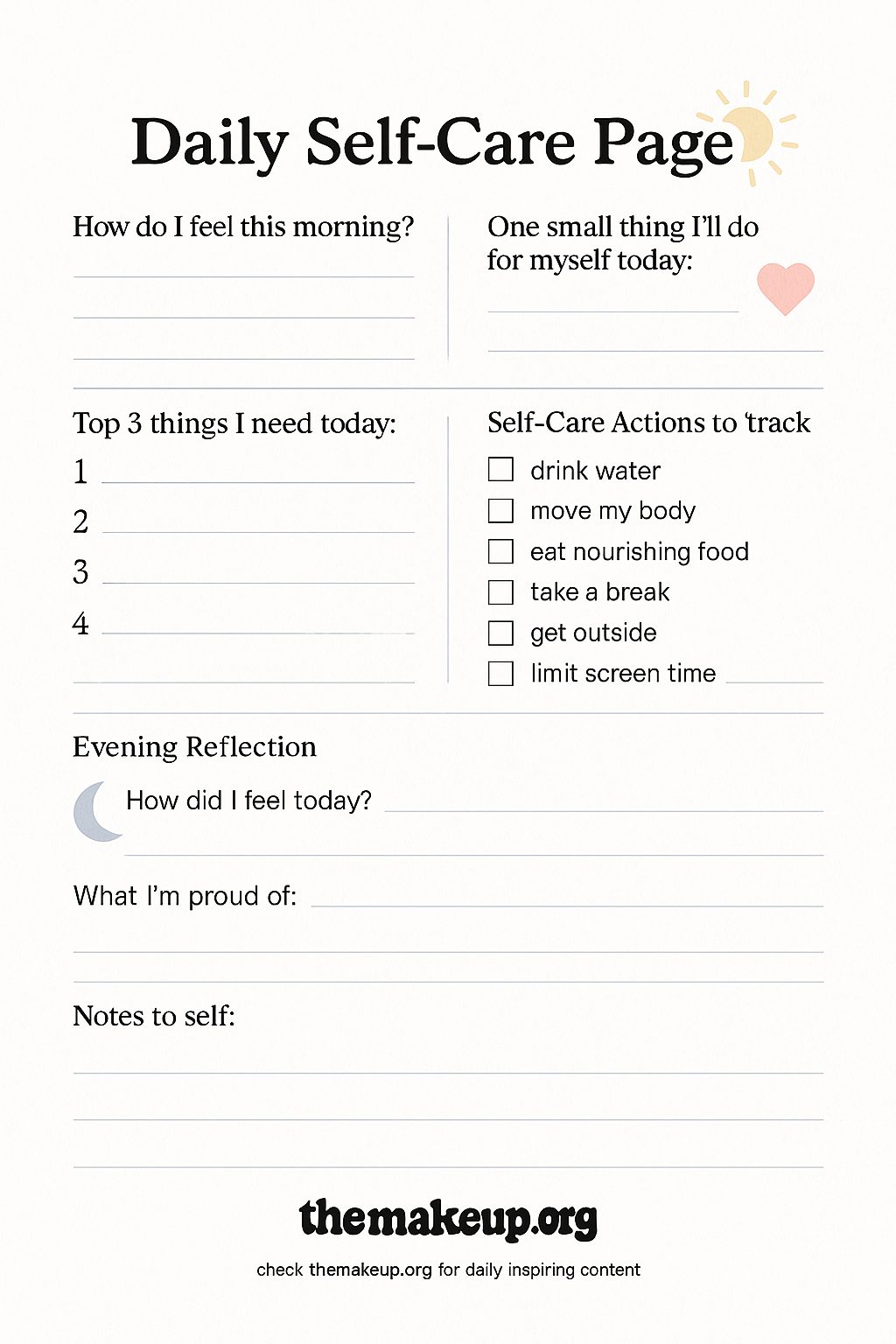
This worksheet is most effective when:
- It’s scannable and light (takes under 5 minutes)
- Includes both functional habits and emotional awareness
- Leaves space for self-expression and personalization
🧩 Sections to Include:
1. How do I feel this morning?
☀️ 1-word mood check or emojis (Happy, Tired, Anxious, Calm, etc.)
2. Today I want to feel…
➡️ Intention setting (Empowered, Peaceful, Focused…)
3. Top 3 things I need today:
📝 Encourages intentional focus
4. One small thing I’ll do for myself today:
💛 Reinforces self-worth and care
5. Self-Care Actions to Track:
✅ Checkboxes for:
- Drank water
- Moved my body
- Ate nourishing food
- Took a break
- Got outside
- Limited screen time
(add 1-2 blanks for personal habits)
6. Evening Reflection – How did I feel today?
🌙 Mood/emotion + short reflection
7. What I’m proud of:
⭐ Encourages positivity and self-recognition
8. Notes to Self:
🖊️ Small space for journaling, doodling, or a quote/affirmation

2. Weekly Check-In Sheet
Think of this as your personal reset ritual.
Use it on Sundays (or any day) to pause and reflect on:
- What energized or drained you
- What boundaries worked (or didn’t)
- What you want to bring into the next week
This page helps you course-correct and stop dragging stress from one week into the next.
Example: You realize scrolling Instagram every night made you feel worse. So next week, you replace it with 10 minutes of journaling. One small tweak — big shift.
📝 Worksheet 2: Weekly Check-In
✅ Purpose:
To help the user pause once a week, reflect on how things are going, and reset their energy and focus — without judgment.
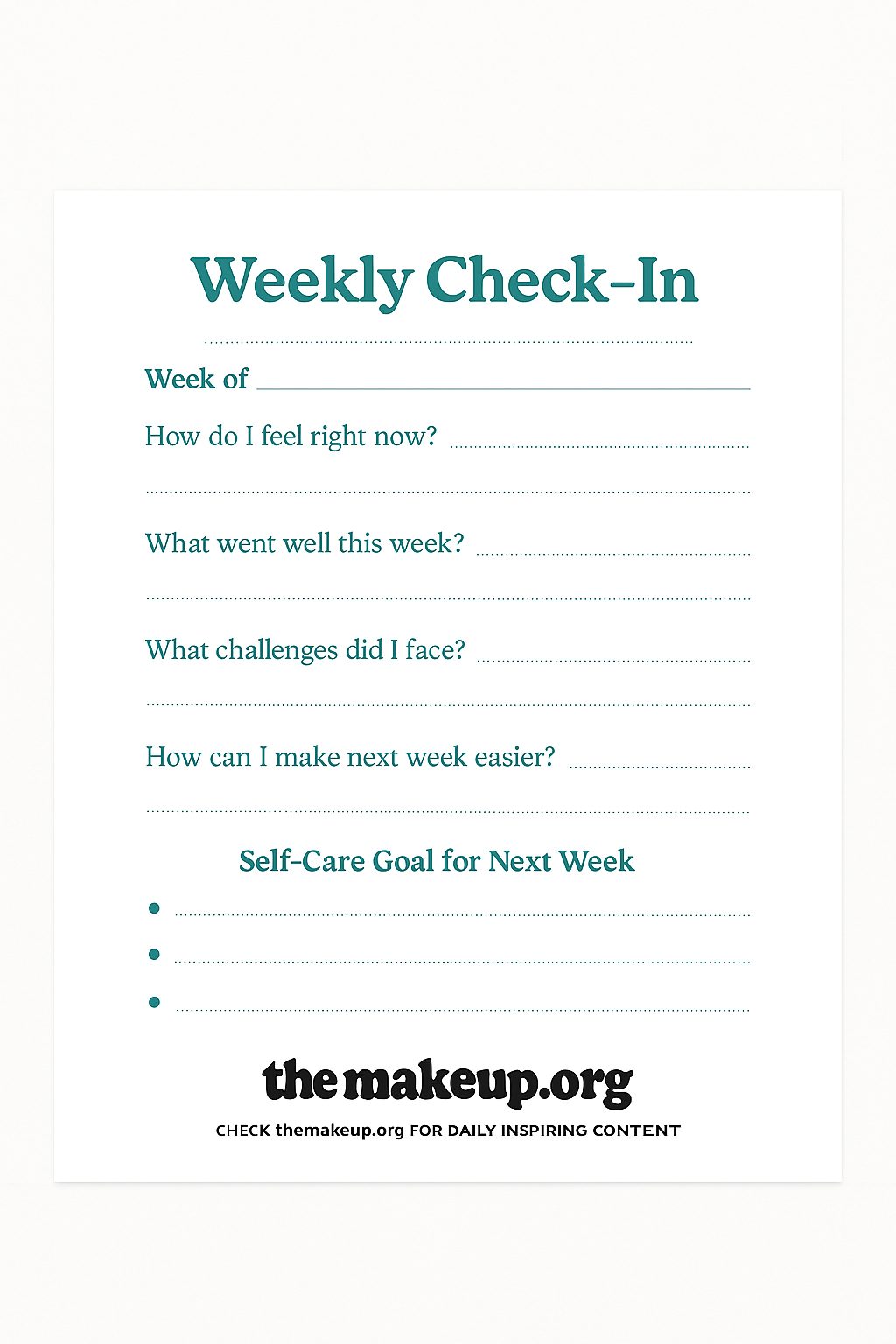
🔍 Why it works:
- Encourages self-awareness and emotional release
- Helps spot patterns (emotional, mental, or physical)
- Provides a structure to gently course-correct before burnout hits
🧩 Sections to Include:
1. This week I felt…
Mood tracker or open-ended (space for words or emoji selection)
2. What felt good this week?
✨ Helps reinforce positive experiences or habits
3. What felt heavy or draining?
🚫 Spot what to reduce or avoid next week
4. Something I’m proud of:
💛 Builds confidence and gratitude
5. Energy Check:
Visual scale or word-based sliders like:
- Mental energy: [Low – Medium – High]
- Emotional space: [Overwhelmed – Balanced – Light]
- Social battery: [Empty – Recharged]
6. Next week I want to feel…
Intention-setting for the week ahead
7. What I’ll do more of:
✅ Encourages aligned action
8. What I’ll let go of:
🧘♀️ Release mindset or habits that don’t serve

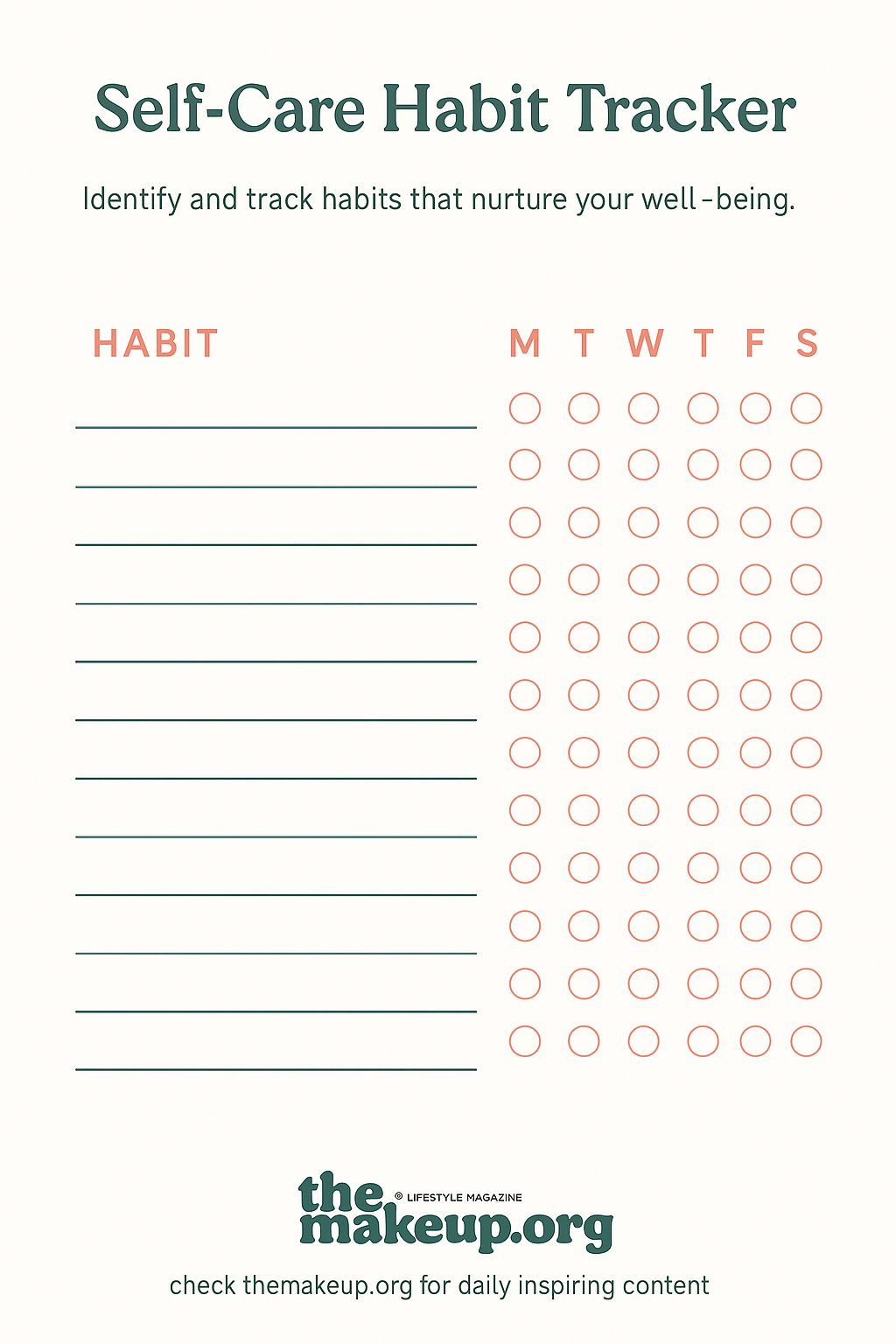
3. Self-Care Habit Tracker
This sheet is for building small, meaningful habits that support your well-being — no guilt, no pressure.
You choose which habits to track: water, walks, meditation, digital detox… whatever works for you.
Check them off daily and watch how momentum builds.
Example: You commit to “5 minutes outside” daily. At first, you skip a few days. But seeing those checkboxes helps you get back on track without shaming yourself.
📝 Worksheet 3: Self-Care Habit Tracker
✅ Purpose:
To help users track small, meaningful self-care habits consistently — not perfectly.
This sheet is ideal for:
- Building momentum
- Celebrating tiny wins
- Gaining awareness around consistency
- Customizing based on energy level
🧩 Sections to Include:
1. Title + Date Range:
🗓️ “Weekly Habit Tracker”
Small space to write the week’s start date (ex: May 20–26)
2. Your Chosen Habits:
A column for the user to write their personal habits, with 6–8 rows to customize:
- Example rows might include:
- Drink 8 glasses of water
- Move for 15 minutes
- Sleep before 11 PM
- Take a mindful break
- Screen-free time
- Journal or pray
3. Days of the Week Tracker:
7 columns (M–S) with boxes or checkmarks to mark completion across each habit
Optional: Add a ✨Total Wins✨ column or a gentle smiley face tracker
4. Reflection Space:
Small section at the bottom:
- “What I learned this week”
- “One habit I want to focus on next”
- Optional: “One habit I struggled with (and why)”
4. Self-Care Menu (Your Personal Toolbox)
This is a life-saver when your brain feels foggy and you can’t even think of what would help.
You pre-fill this page with easy, comforting things that bring you back to yourself. Think:
- Take a 10-minute walk
- Play your comfort playlist
- Call someone safe
- Journal one sentence
- Make tea + sit outside
Example: After a rough work call, instead of numbing out, you glance at your self-care menu and do one of your “go-to” resets. It feels better than you expected.
📝 Worksheet 4: Self-Care Menu (Your Personal Toolbox)
✅ Purpose:
To help users create a personalized, go-to list of comforting self-care actions they can turn to anytime — especially when they don’t feel like thinking.
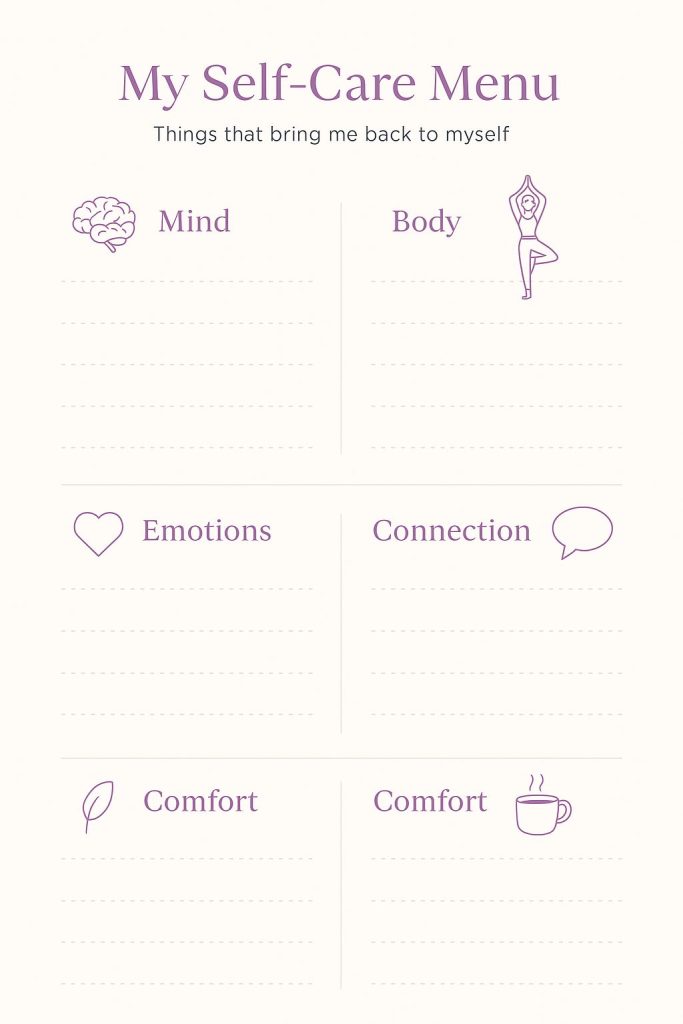
🧩 Sections to Include:
We’ll divide the worksheet into self-care categories — each with fillable space for ideas. I suggest these five main sections based on what works best in mental wellness tools:
1. Mind 🧠
Ideas for calming or stimulating the mind:
(e.g., journal, read a page, brain dump, no-phone hour…)
2. Body 🧘♀️
Physical care and movement:
(e.g., stretch, dance to a song, walk barefoot, hydrate…)
3. Emotions 💛
Tools for emotional release or soothing:
(e.g., cry, vent in a notebook, pray, hug a pillow…)
4. Connection 💬
Relational or spiritual connection:
(e.g., call a friend, send a voice note, talk to God…)
5. Comfort 🕯️
Simple cozy feel-good actions:
(e.g., light a candle, make tea, change into soft clothes…)
You can leave 4–6 blank lines under each category for users to fill in their favorites.
5. Monthly Reset Page
Life moves fast — this page helps you pause and recalibrate once a month.
It includes prompts like:
- What made me proud this month?
- What felt heavy?
- What do I want more (or less) of next month?
It’s not about productivity — it’s about self-awareness.
Example: You notice you felt disconnected all month. You add “more social time” as an intention for next month — and plan two coffee dates.
📝 Worksheet 5: Monthly Reset Page
✅ Purpose:
To help users reflect on their month with intention, identify patterns, and set gentle goals for the month ahead — without pressure.
This worksheet gives closure and clarity, and it’s especially useful at the start of a new month or personal season.
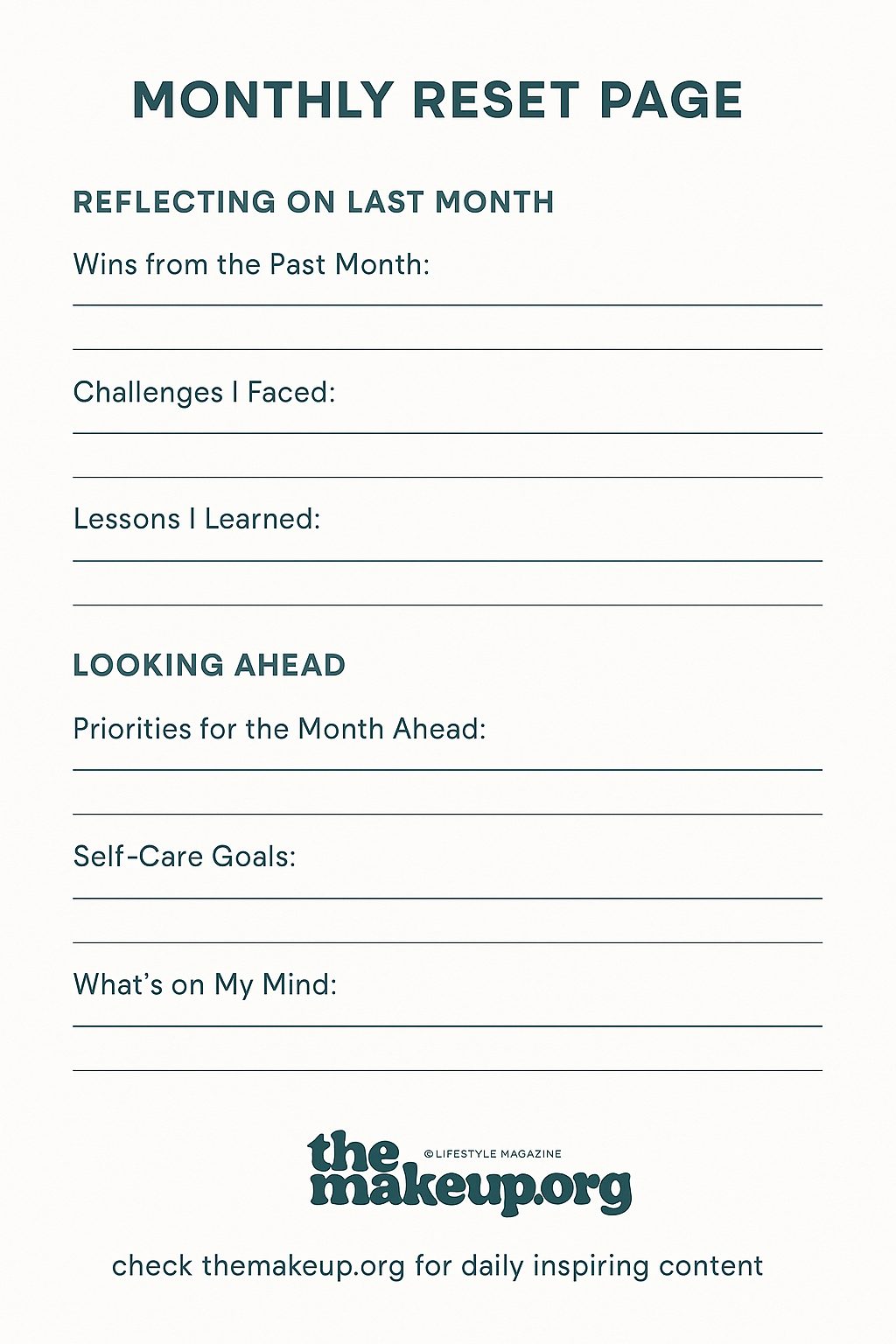
🧩 Sections to Include:
1. This month, I felt…
Short mood + energy overview (free-text or mood icons)
2. Highlights of the Month ✨
Things that made them smile, progress, moments of peace or success
3. Challenges I Faced 😓
Space to process emotional or logistical difficulties
4. What I Learned About Myself 🧠
Personal insight, mindset shift, or realization
5. What I Want to Leave Behind 💨
Habits, thoughts, patterns that no longer serve
6. What I Want to Invite In 🌱
Intentions, energy, or focus areas for next month
7. Next Month I’ll Prioritize…
Space to write 2–3 self-care priorities