
A July trip to Europe is genuinely exciting, and getting your wardrobe right makes the whole experience so much more enjoyable. So let’s talk about what to wear in Europe in July, starting with the actual conditions you’ll be dressing for.
Temperatures across most of the continent run between 18°C and 30°C (64°F to 86°F), which sounds simple until you’re standing in a shaded piazza at 9 p.m. feeling the chill come off the cobblestones.
I’d build around three things: breathable natural fabrics like linen and cotton, a light layer you can stuff into your day bag, and footwear that handles six-plus miles of pavement without drama.
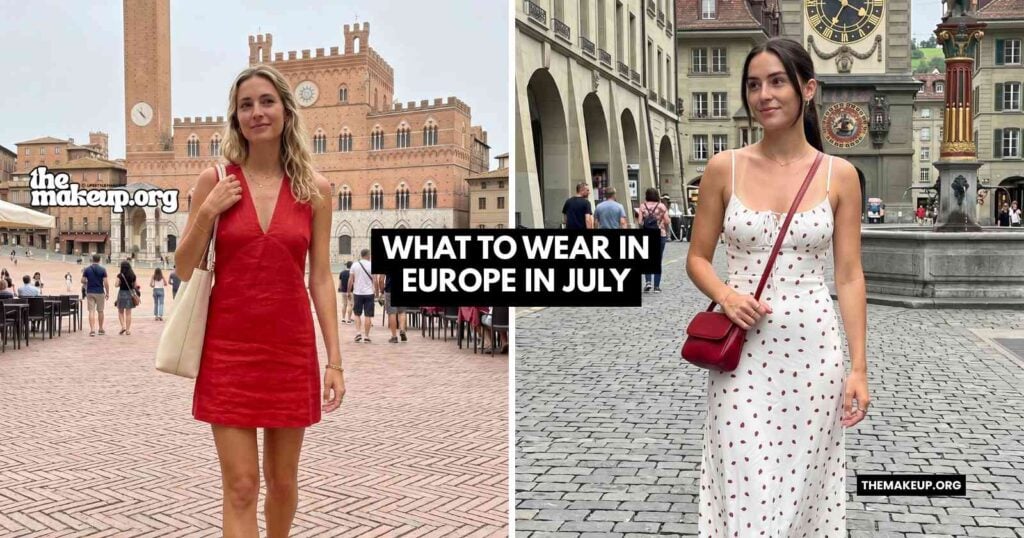
Locals across Western and Southern Europe dress with a kind of effortless neatness. Think clean lines, simple silhouettes, and absolutely no athletic gear in the city center.
Nothing stands out more than a tourist in a logoed hoodie and sneakers when everyone around them is in a linen shirt and leather sandals.
Below you’ll find specific outfit ideas for women, fabric recommendations, what to skip, and a day-to-evening breakdown that works whether you’re spending a week in Paris or two weeks bouncing across multiple countries.
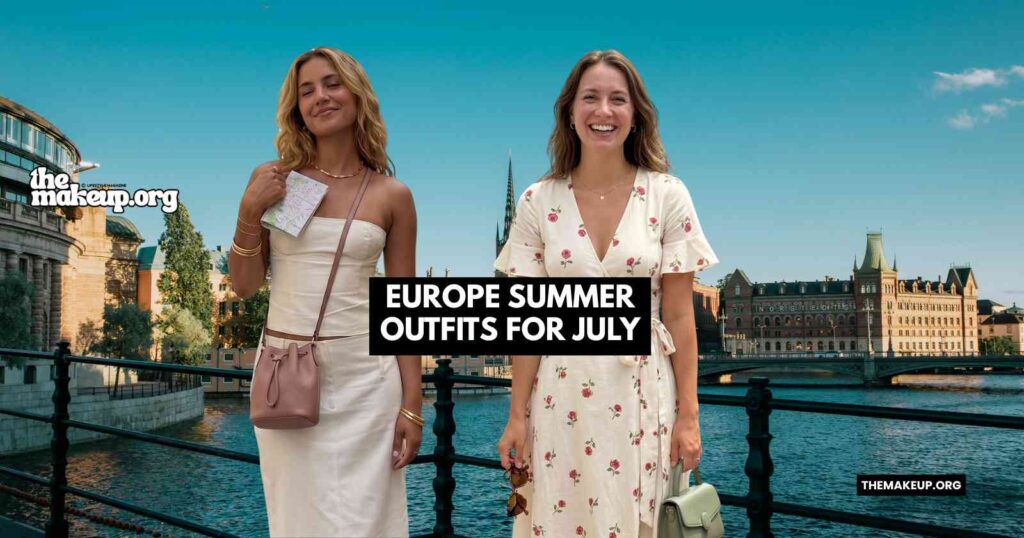
What to Wear in Europe in July
Weather & Climate
July in Europe brings a real mix of summer warmth and gentle shifts in temperature. Typical days range from 18°C to 30°C (64°F to 86°F), with early mornings and late evenings often cooler than the afternoons.
Most days are pleasantly warm, but it is not unusual to encounter a breeze or the occasional short shower.
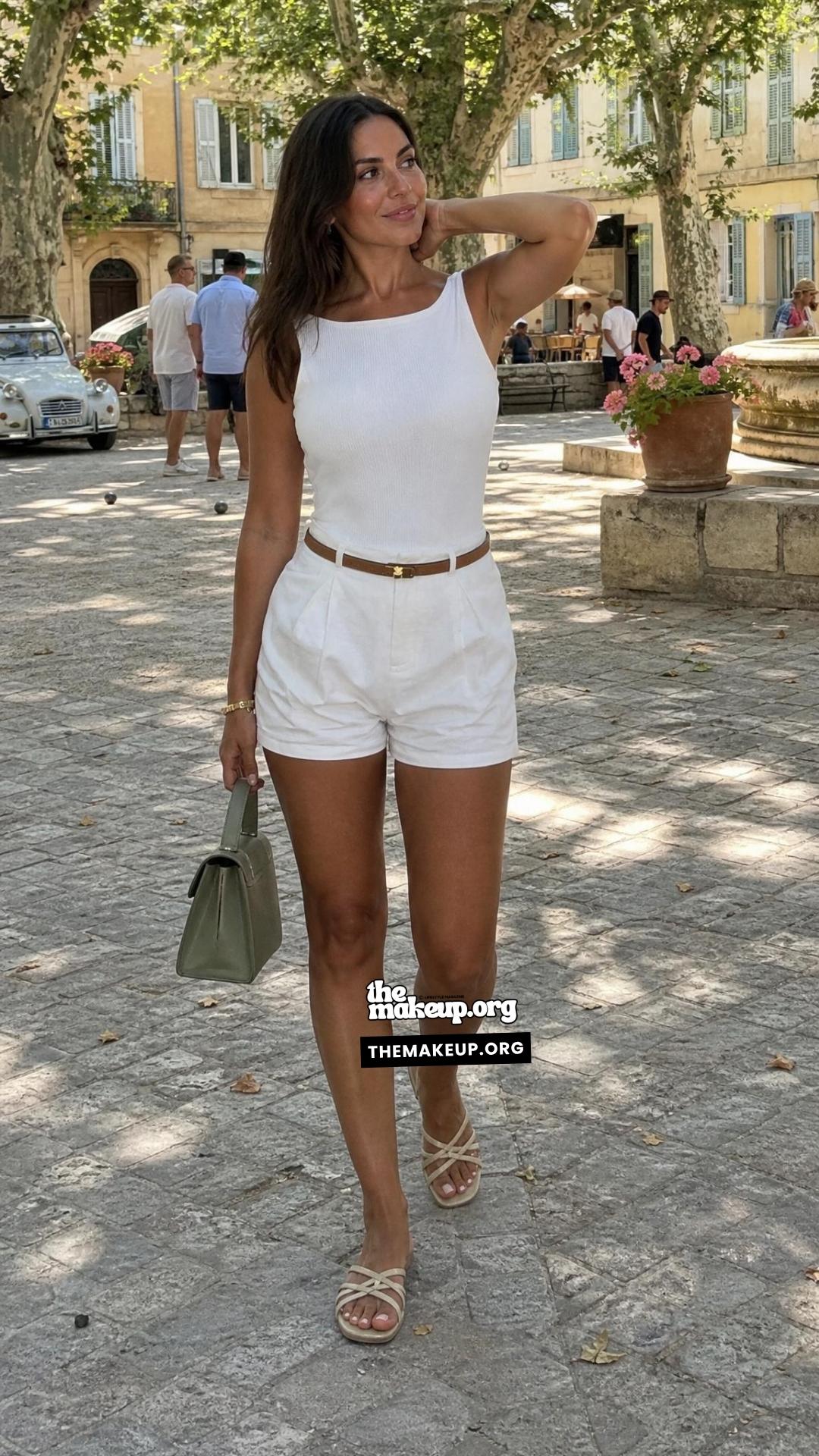
✨ Get the Look
Sleeveless White Top / White Pleated Shorts / Light-Brown Belt / Beige Flat Sandals / Sage Green Handbag
Layering matters here because the temperature can feel quite different from midday sun to shaded evening streets. Always have something to throw on, even if you don’t end up needing it.
How Locals Dress ✨
Europeans tend to balance style and comfort, especially during the busy summer months. Outfits are neat but rarely fussy, with a focus on clean lines and simple, practical pieces that do double duty.

Lightweight trousers, linen shirts, and just-polished-enough sneakers or flats make up many day-to-day looks. These are the kinds of pieces that photograph well at noon and still look intentional over dinner.
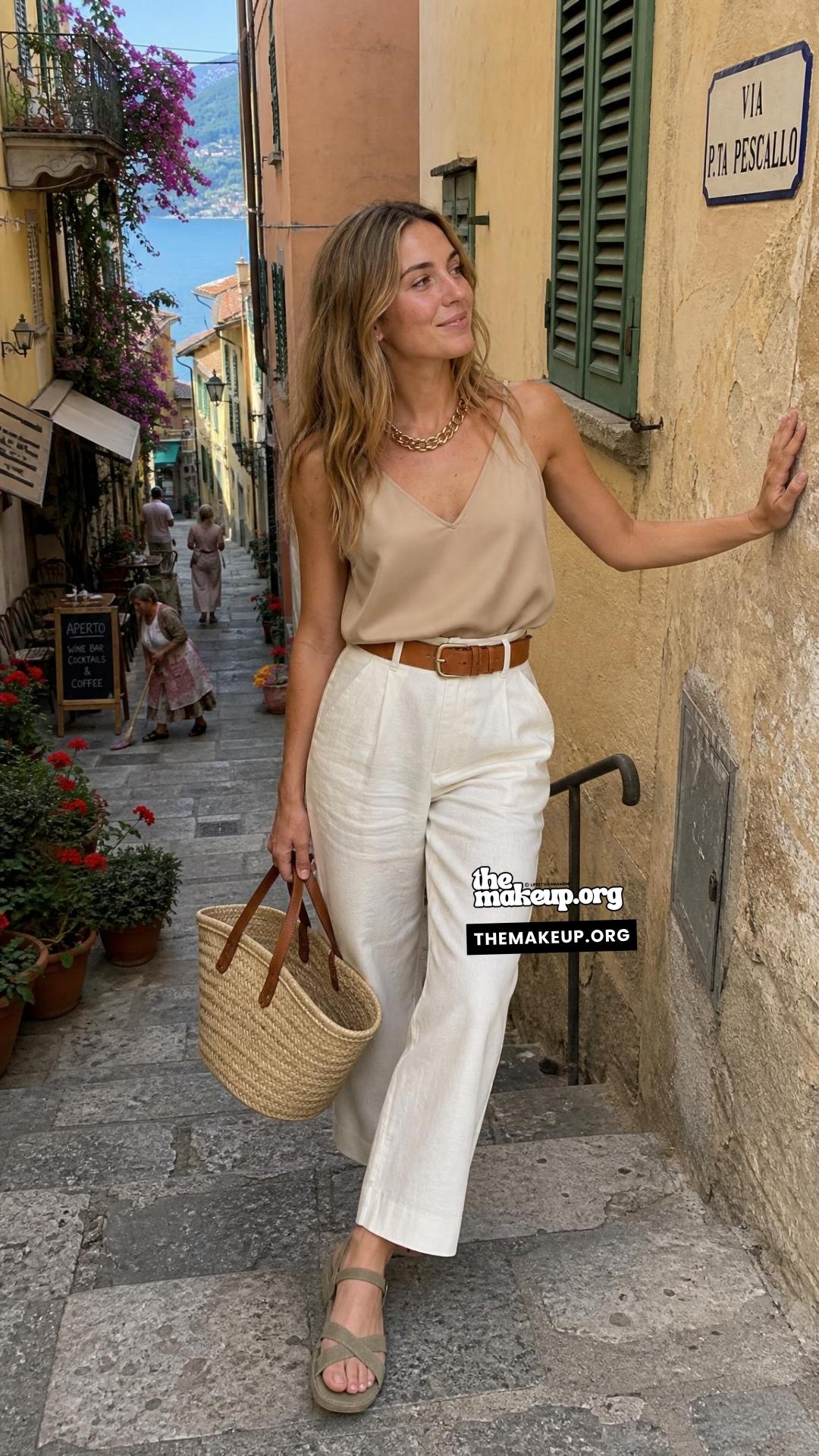
✨ Get the Look
Camisole Top / Straight-Leg Trousers / Belt / Wedge Sandals / Straw Tote Bag / Chain Necklace
Locals also keep fine cardigans or airy jackets in their bags for when the temperature dips later in the day.
One of my favorite observations from traveling Europe in summer: women here rarely match everything perfectly, but everything fits well and the fabrics are always good. That’s the real formula.
Building a Chic Capsule Wardrobe for July
The most practical approach to packing for Europe in summer is thinking in terms of a capsule: a small, deliberate collection of pieces where everything mixes with everything else.
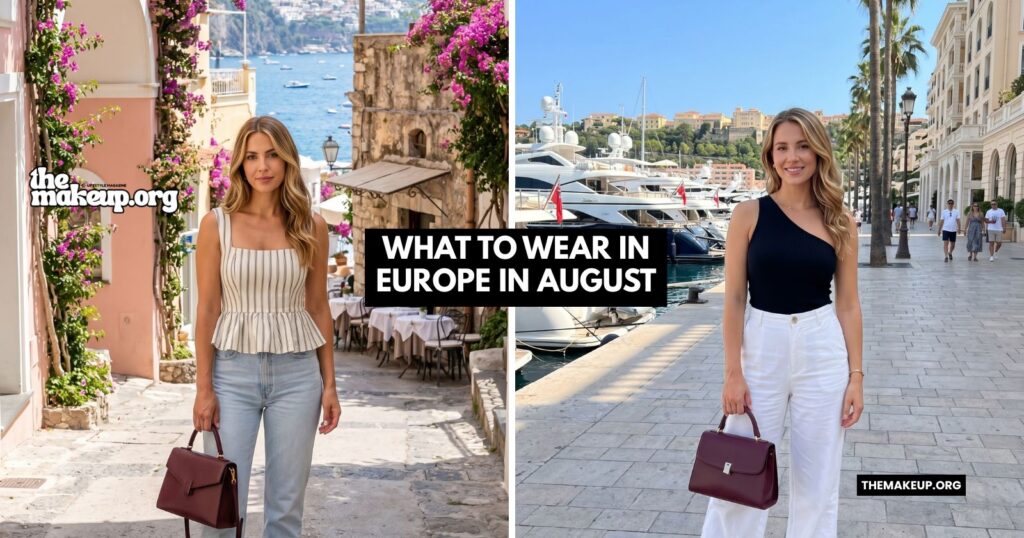
I’d aim for roughly ten to twelve items of clothing, not counting underwear and workout gear.
Anchor the capsule in neutrals like navy, beige, olive, and ivory, then bring one or two pieces with a touch of color or print.
This makes getting dressed easy on days when you’re tired or jet-lagged, and it means fewer tough decisions at the suitcase each morning.
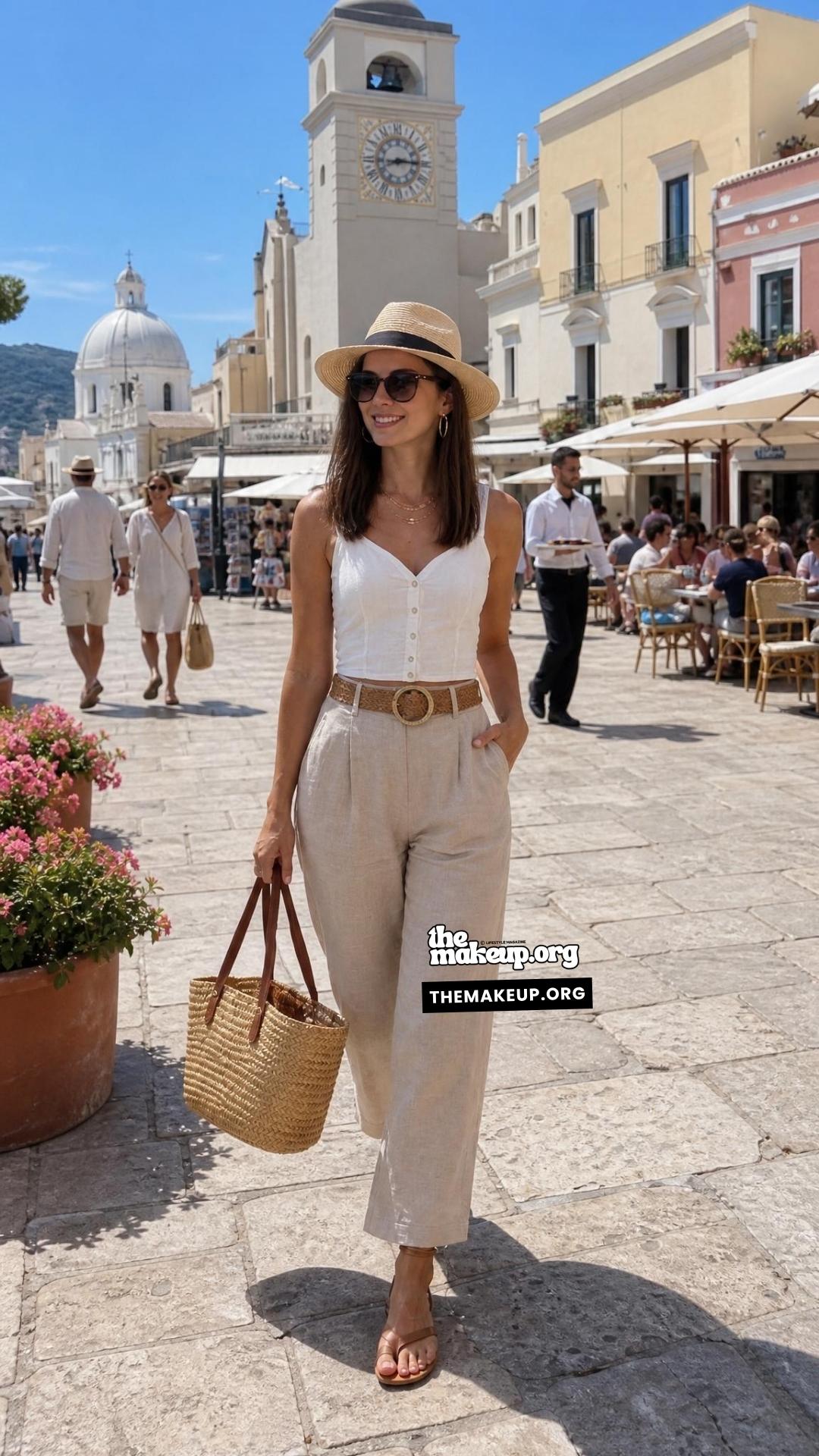
✨ Get the Look
White Sleeveless Top / Beige Trousers / Tan Woven Belt / Flat Thong Sandals / Straw Tote Bag / Straw Hat / Cat-Eye Sunglasses
Wrinkle-free travel clothes for women are genuinely worth seeking out here. Linen wrinkles attractively and reads as intentional, but synthetic-blend fabrics that resist creasing are a real asset when you’re living out of a carry-on for a week or more.
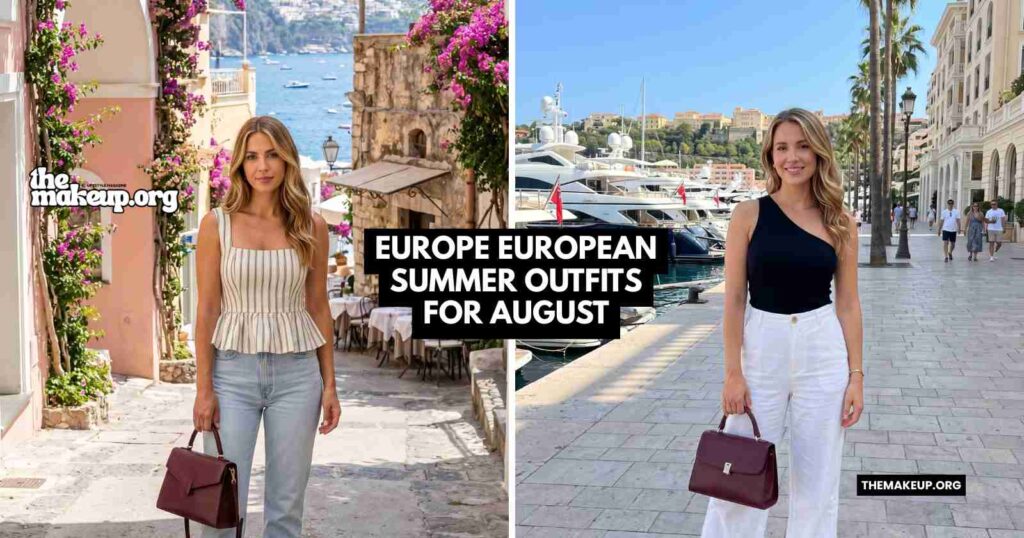
Several brands now make stylish travel clothes that look nothing like technical gear, and these are worth the investment before you go.
Outerwear 🧥
In July, most outerwear should be light and easy to carry. A thin jacket or versatile cardigan is often enough for cooler mornings or an unexpectedly breezy evening along the water.
Heavy coats are not needed, but a compact rain layer can come in handy if rain is in the forecast, particularly in Northern Europe.
Choose something that packs down small and won’t weigh you down once the temperature rises by mid-morning.

Layers & Fabrics 🧵
Fabrics are best kept lightweight and breathable. Cotton and linen are always the most comfortable choices for warm afternoons, and soft jersey blends work well for travel outfits heading into cooler nights.
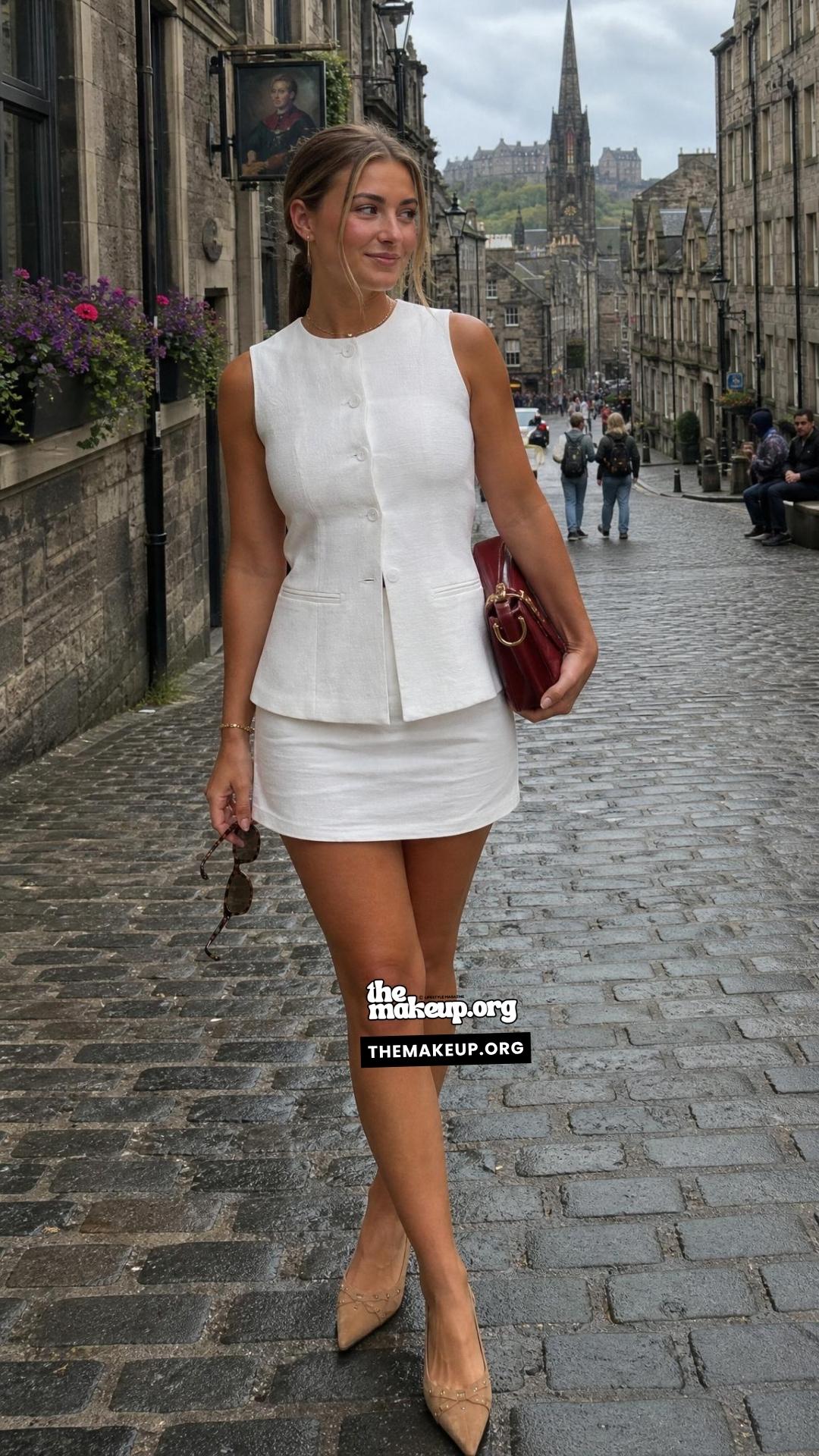
✨ Get the Look
White Sleeveless Top / White Mini Skirt / Nude Heels / Dark Red Handbag
Avoid anything that traps heat or creases badly after a few hours in a bag.
Layers should be easy to add or remove without fuss. A fine-knit sweater, a casual button-down, or a silk scarf can adjust for temperature swings while still looking put together.
These small, packable pieces genuinely earn their place in your suitcase.
Tops 👚
Short-sleeved shirts and sleeveless tops are easy staples, especially in lighter fabrics that let your skin breathe.
If you spend time inside museums or religious sites, a top with a bit more coverage, like a light blouse or a longer-sleeve linen tee, is both handy and respectful.
On especially hot days, a relaxed tank or cotton tee works well, provided you keep a layer close for changing conditions. I’d pack two or three tops you genuinely love and rotate them rather than bringing seven you feel neutral about.
Bottoms 👖
Comfortable trousers, midi skirts, and chino-style shorts are all solid choices for July. Styles that are loose and airy help with walking and heat, while polished denim works well for cities with a slightly smarter local vibe, like Paris or Copenhagen.
Super short shorts and workout leggings tend to stand out in a way that doesn’t serve you, especially in city centers or older neighborhoods. Choose a style that feels both comfortable for you and appropriate for wherever you’re headed that day.
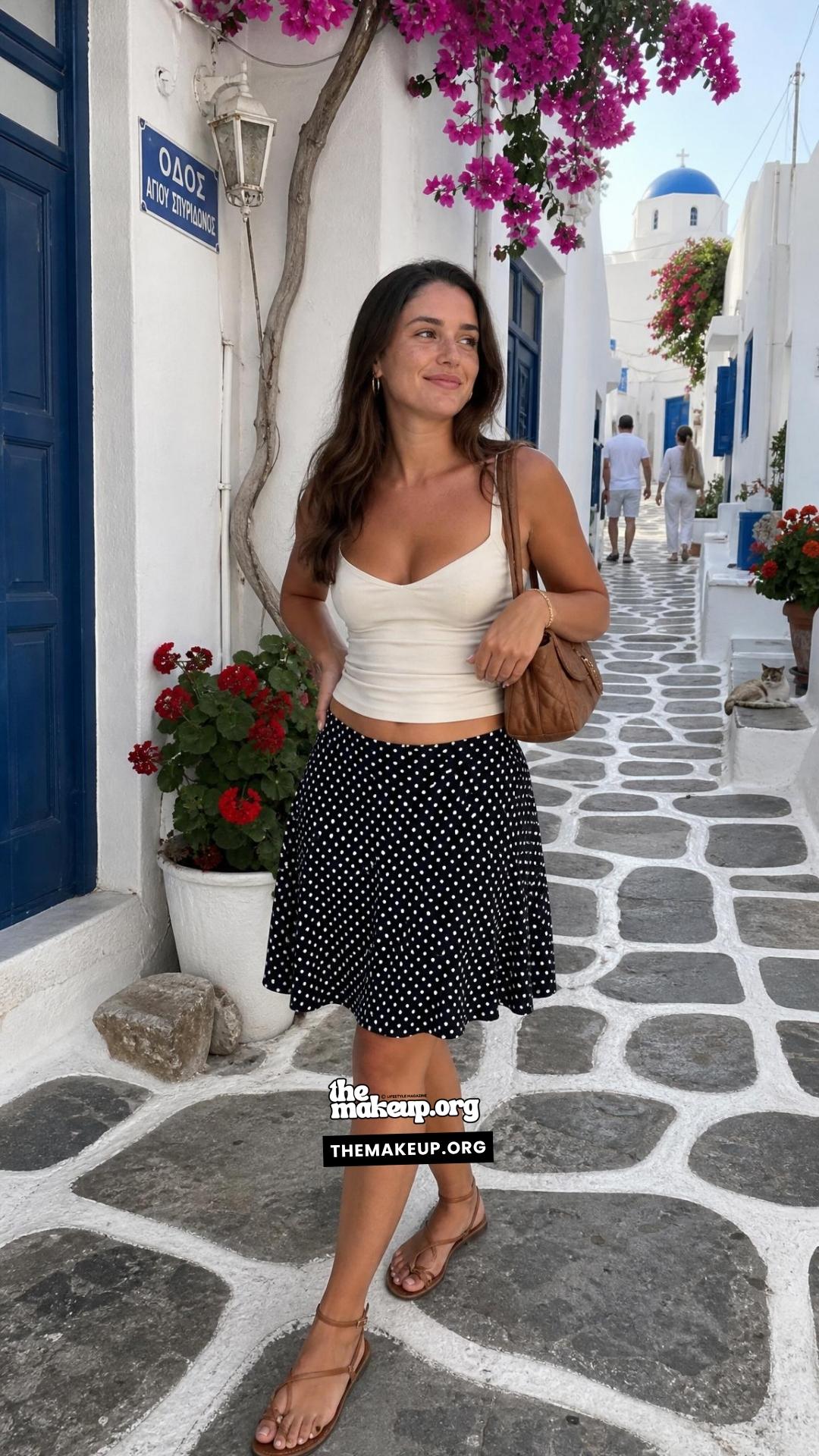
✨ Get the Look
Cream Camisole Tank Top / Polka Dot A-Line Skirt / Brown Strappy Sandals / Brown Quilted Shoulder Bag
Dresses 👗
Simple summer dresses in cotton, viscose, or linen are a natural fit for July’s weather. Midi and knee-length shapes get the most use, working for both morning sightseeing and an evening dinner without requiring a full outfit change.
A dress that layers well with a light cardigan or scarf is genuinely one of the most efficient things you can pack. It counts as one item but functions as three different looks depending on how you style it.
What to Wear on the Plane to Europe
The flight over is long, often overnight, and the cabin gets cold. I’d wear your most comfortable, packable layer on the plane: a relaxed linen trouser or jogger-style travel pant, a soft top, and a cardigan or oversized scarf that doubles as a blanket.
Slip-on shoes are a must for long-haul travel, partly for comfort and partly for airport security. Avoid anything tight or structured. You want to arrive feeling rested and ready, not stiff and rumpled.
If you land and go straight to sightseeing, your plane outfit should be good enough to wear in public. That’s the test I always apply when deciding what to wear on the flight to Europe.
Shoes 👢
Flexible footwear is a must, since European days often mean lots of walking on a mix of pavement and uneven stone. Supportive sneakers or comfortable flats are practical for city exploring and blend in well with local style.
Sandals with sturdy soles can also work well, but make sure they are fully broken in before you travel. A pair of slip-on shoes or casual loafers handles evenings without overdressing and gives your feet a break from sneakers.
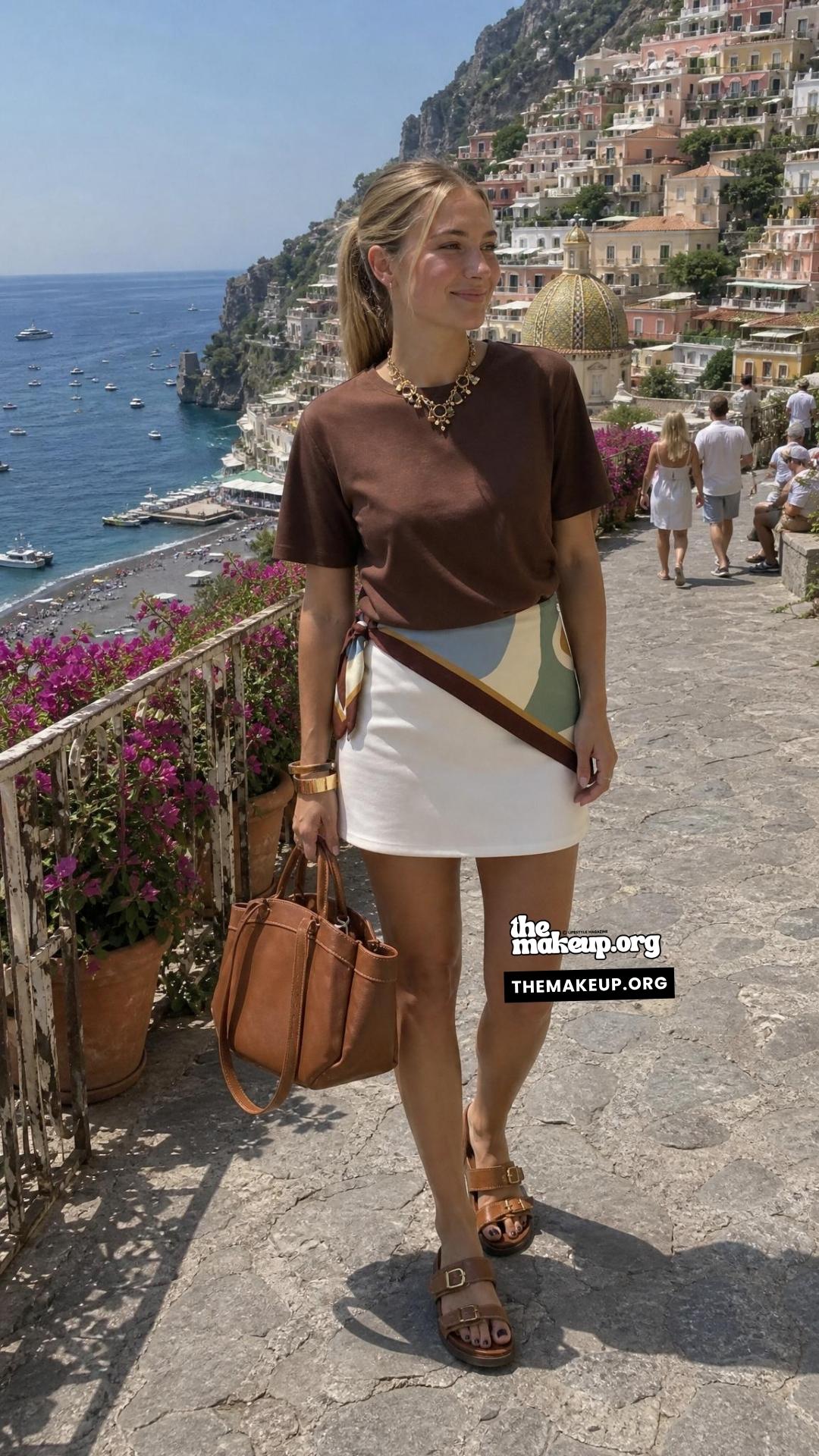
✨ Get the Look
Brown T-shirt / White Skirt / Multicolored Scarf / Brown Leather Tote / Flat Brown Sandals / Gold Necklace / Gold Bangle Bracelet
Accessories 🧣
A cloth bag or small crossbody makes daily essentials easy to carry and keeps your hands free. Lightweight sunglasses, a packable sunhat, and a scarf or shawl round out your outfit practically, useful for sun protection, covering up at cultural sites, and keeping warm after dark.
These pieces also add visual interest to simple outfits without adding weight. A great scarf is one of the most versatile travel accessories you’ll own.
Color Palette & Style Vibe 🎨
Natural colors blend in best and make mixing easy. Navy, beige, olive, and soft ivory form the base of most European summer outfits, with a brighter accent piece if you enjoy a touch of color. Most locals choose simple prints or solids, keeping everything easy to pair.
The overall vibe to aim for is quietly put-together. Nothing flashy, nothing sloppy. Clean fabrics, clothes that fit well, and shoes that look intentional. That combination will carry you through most situations you encounter.
Daytime vs Evening Outfits 🌞🌙
During the day, keep things simple and breathable, with layers stowed in your bag for when you need them. Lean into comfortable shoes and practical sun protection while you’re walking, and don’t overthink it.
For evenings, swapping into a slightly nicer pair of shoes or adding a lightweight jacket is often enough to shift the look. People tend to stick to the same basics, just polished a little for dinner or an aperitivo outside as the sun sets.
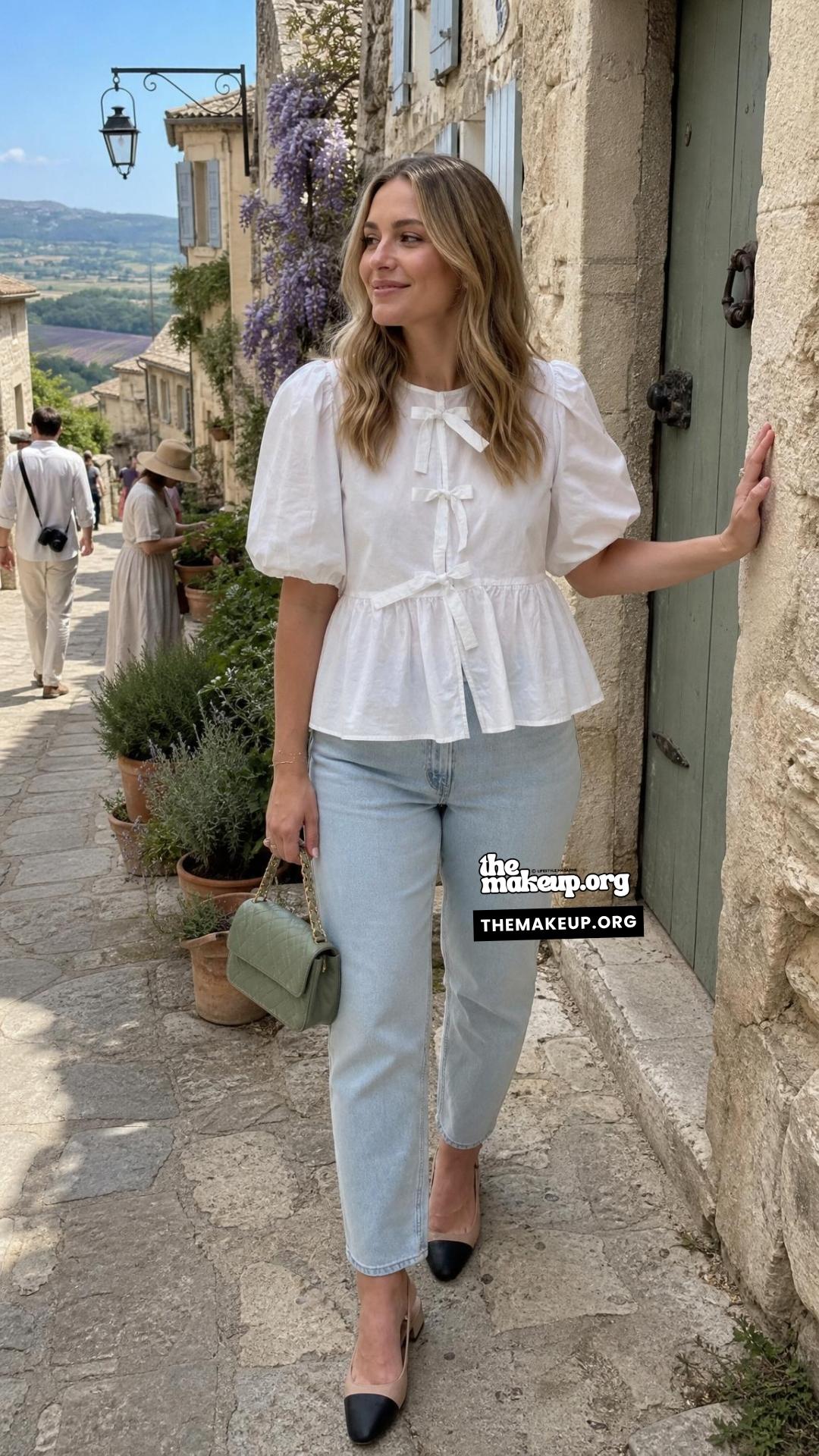
✨ Get the Look
White Blouse / Light-Wash Jeans / Slingback Pumps / Quilted Shoulder Bag
Common Mistakes / What to Avoid 🚫
Try not to overpack or rely on heavy clothing. July rarely calls for substantial outerwear, and you’ll regret dragging an extra bag up cobblestone streets. Skip rigid or high-heeled shoes, which can be uncomfortable on uneven surfaces and genuinely painful by afternoon.
Avoid athletic wear unless you’re headed to the gym. Shorts and strappy tops are fine in tourist zones, but pay attention to dress codes at religious sites and older formal restaurants. Carrying a scarf solves most of those situations instantly.
Final Tips & Best Practices ✅
Choose clothes you can layer and wear in multiple ways. Less is more: most people find that a handful of well-chosen pieces, including some good wrinkle-free travel clothes, makes for a significantly easier and more enjoyable trip than an overstuffed suitcase.
Leave room in your schedule, and in your suitcase, for weather surprises or local finds you want to wear immediately. Discovering a linen shirt or a pair of earrings in a market and wearing them that same afternoon is one of the genuine joys of traveling in Europe.
Final Outfit Checklist 📝
For July in Europe, prioritize breathable tops, loose trousers or skirts, and a versatile summer dress. Bring a lightweight cardigan, a packable jacket, and an easy scarf for sudden shifts in weather. Comfortable walking shoes, flexible enough for both urban exploring and day trips, are non-negotiable.
Choose a small day bag, wear sunglasses, and trust a palette of easy neutrals and soft colors. The right layers will keep you comfortable and appropriately dressed for every summer day, and every summer evening, you’re likely to encounter.
FAQ: What to Wear in Europe in July
What is the 5 4 3 2 1 rule for packing?
The 5-4-3-2-1 rule is a packing framework: five sets of socks and underwear, four tops, three bottoms, two pairs of shoes, and one jacket or outerwear layer. It’s a useful starting point for a week-long trip and translates well to a Europe in July packing list, where versatile, mix-and-match pieces matter most.
What is the 3-3-3 rule for clothes?
The 3-3-3 rule means packing three tops, three bottoms, and three pairs of shoes as your core clothing foundation. It’s slightly more minimal than the 5-4-3-2-1 approach and works especially well if you’re moving between cities quickly and want to travel with carry-on only.
What is the 3-5-7 rule in packing?
The 3-5-7 rule is a packing guideline suggesting three pairs of shoes, five tops, and seven days’ worth of essentials as the upper limit for a one-week trip. It encourages you to think in terms of complete outfits rather than individual items, which helps avoid overpacking.
What is the most forgotten item when traveling?
Chargers and adapters are frequently left behind, but in terms of clothing, a compact rain layer is the item most travelers wish they had packed for European summer. A light scarf that doubles as coverage for religious sites is another commonly overlooked essential.
What are the 5 biggest packing mistakes to avoid?
The five most common packing mistakes are: overpacking and bringing items you never wear, packing heavy fabrics that don’t breathe, choosing shoes that aren’t broken in, forgetting a light layer for cool evenings, and not leaving space for things you pick up along the way. All five are easy to avoid with a little planning before you go.
What should women specifically wear in Europe in July?
Women traveling in Europe in July are best served by midi dresses in linen or cotton, lightweight trousers, and simple tops that layer well. Comfortable walking sandals or supportive sneakers are essential, and a packable scarf covers everything from sun protection to dress codes at churches.
Is it worth buying wrinkle-free travel clothes for a Europe trip?
Yes, especially if you’re moving between destinations frequently or living out of a carry-on. Wrinkle-free travel clothes for women have improved dramatically in recent years and many look genuinely stylish, not like technical gear.
Linen also works beautifully since its natural creasing reads as intentional rather than untidy.
Final Takes
Dressing well in Europe in July comes down to knowing the conditions and choosing pieces that genuinely work across them. Light, breathable fabrics like linen and cotton, a neutral color base, comfortable walking shoes, and one good layer for the evenings will carry you through almost every situation you encounter.
My honest advice: pack less than you think you need, choose quality over quantity, and leave a little room for what you find along the way. The best travel outfit is often the one you discovered in a small shop on day three.