
A ChatGPT makeover is a free, at-home glow-up where you upload a selfie, answer a few questions, and get a personalized color palette, skincare routine, haircut, and outfit plan in minutes. No appointment, no studio lighting, no waitlist.
Here’s the hook: what costs $150 to $300 with a professional color analyst or stylist is now a prompt plus a selfie.
I’ve spent weeks running my own face, hair, and closet through ChatGPT. Below are the exact copy-paste “persona” prompts I use, plus where it nailed my glow up and where it got things flat-out wrong.
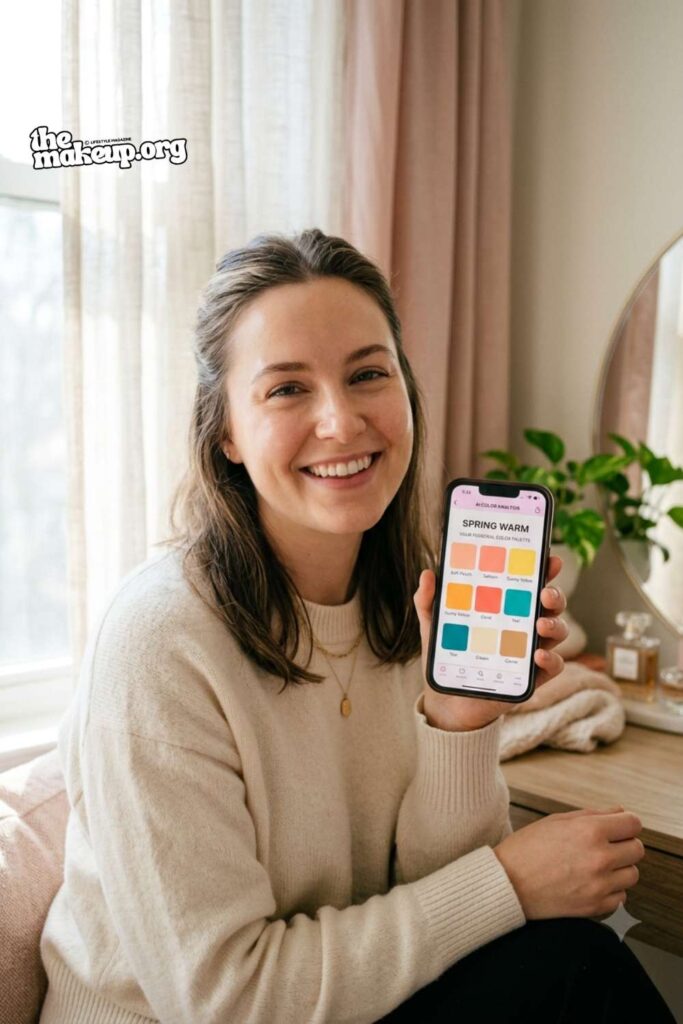

How ChatGPT Makeovers Work
The process is simple: you upload a clear selfie, ChatGPT “reads” your coloring and features, and you get tailored advice back. It works best when you give it a great photo and a little context.
Think of it as three steps:
- Upload a photo so it can see your skin, hair, and eyes.
- Answer its questions about your goals, budget, and lifestyle.
- Get a structured plan you can save, screenshot, and shop.
You’ll need the image upload feature, which is available on the free ChatGPT tier. A paid plan just gives you more messages and sharper analysis.
The best photo to upload (lighting, no filter, bare face)
The single biggest factor in your results is your photo. Good input equals good output. Use one clear, honest shot.

Follow these rules for your selfie:
- Natural daylight near a window, never yellow indoor bulbs.
- No filter, no makeup, hair pushed back off your face.
- Face the light, not a window behind you (that darkens your face).
- Include a plain white or gray background if you can, so colors read true.
One bad-lighting photo can flip your entire color season. I tested the same face under warm lamp light and got “Autumn,” then re-shot in daylight and got “Summer.” The daylight read was correct.
Pro trick: paste your skin, hair & eye hex codes
Here’s the move most people miss. You can remove guesswork by giving ChatGPT the actual hex codes from your photo.
Open your selfie in a free color-picker app or your phone’s editor, tap your cheek, hair, and iris, and copy each hex value. Paste those into the chat.

This turns a vague vibe-check into something closer to real data, and it noticeably tightened my results.
ChatGPT Color Analysis: Find Your Season
ChatGPT color analysis figures out which colors make you look brighter, slimmer, and more awake, and which ones wash you out. It sorts you into a personal color season (Spring, Summer, Autumn, or Winter) based on your undertone, contrast, and depth. This is the flagship glow-up step, and the one competitors do worst.
A pro “personal color analysis” runs $150 to $300 and books out weeks ahead. This gets you 80% of the way for free, today.
The prompt
This step matters because color is the cheapest makeover on earth. Wearing your season near your face makes skin look clearer with zero new products.

Copy this persona prompt exactly, then attach your photo:
You are a certified personal color analyst trained in the 12-season (Sci\ART) system. Before analyzing, ask me 5 clarifying questions one at a time: about my vein color, how my skin reacts to sun, whether silver or gold jewelry flatters me more, my natural hair color as a child, and my eye pattern. Wait for my answers. Then analyze the photo I’ve uploaded and give me:
- My exact season and sub-season, with your confidence level.
- My undertone, contrast level, and color depth, each explained in one plain sentence.
- A 12-color palette with hex codes grouped into “power colors,” “everyday neutrals,” and “colors to avoid.”
- A description I can turn into a saveable palette infographic.
End by asking if I want a makeup and metals (gold vs silver) breakdown.
Forcing it to ask questions first is what separates a real read from a lucky guess.
Upload this photo: a bare-face, daylight selfie plus, if you can, a second photo holding a pure white paper next to your jaw for an accurate undertone reference.
[MY RESULT: describe the season it gave me, the hex palette, and whether it matched my past pro analysis]

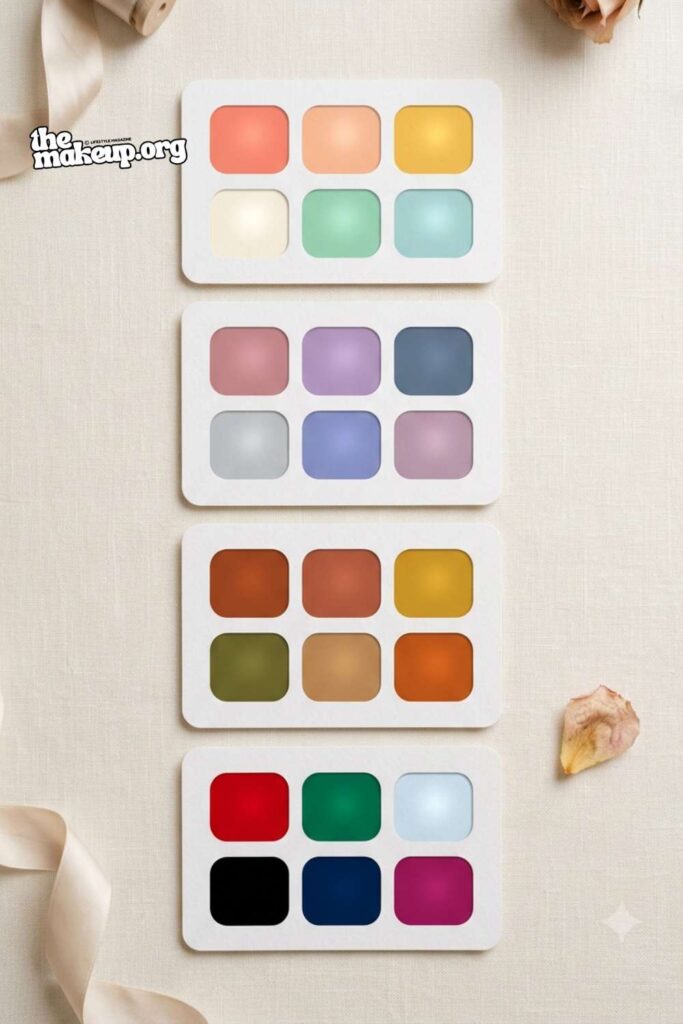
Spring, Summer, Autumn & Winter explained
Not sure what a “season” even means? Here’s the plain-English version so your result makes sense.
- Spring: warm and bright. Golden, clear, peachy coloring. Think coral, warm green, ivory.
- Summer: cool and soft. Ashy, muted, low-contrast. Think dusty rose, slate blue, soft gray.
- Autumn: warm and deep. Rich, earthy, golden. Think rust, olive, camel, terracotta.
- Winter: cool and bold. High contrast, icy or deep. Think true red, black, emerald, pure white.
Most people are a blend, which is why the sub-season (like “Soft Autumn” or “Bright Winter”) matters more than the big four.
Get a celebrity coloring match + a saveable palette
Want your result to click instantly? Ask ChatGPT for a celebrity coloring match, a famous face in your exact season.
Paste this follow-up after your analysis:
Based on my season, name 3 celebrities with the same coloring as me, and for each, list one signature color they wear that I should steal. Then give me a shopping list of 5 wardrobe basics in my power colors with the hex codes, so I can match them in stores.
Seeing “you’re a Soft Summer, like [celebrity]” makes the palette real. Save the swatch screenshot to your phone and pull it up while shopping.
Match your best colors in a knit tee or blazer to test it in real life. [AFFILIATE: seasonal-color wardrobe basics pick]
ChatGPT Skincare Routine by Skin Type
ChatGPT can build a skincare routine matched to your skin type, concerns, and budget, usually a simple AM and PM lineup with specific ingredients. Tell it your skin type and goals, and it returns a step-by-step order so you stop layering products wrong.
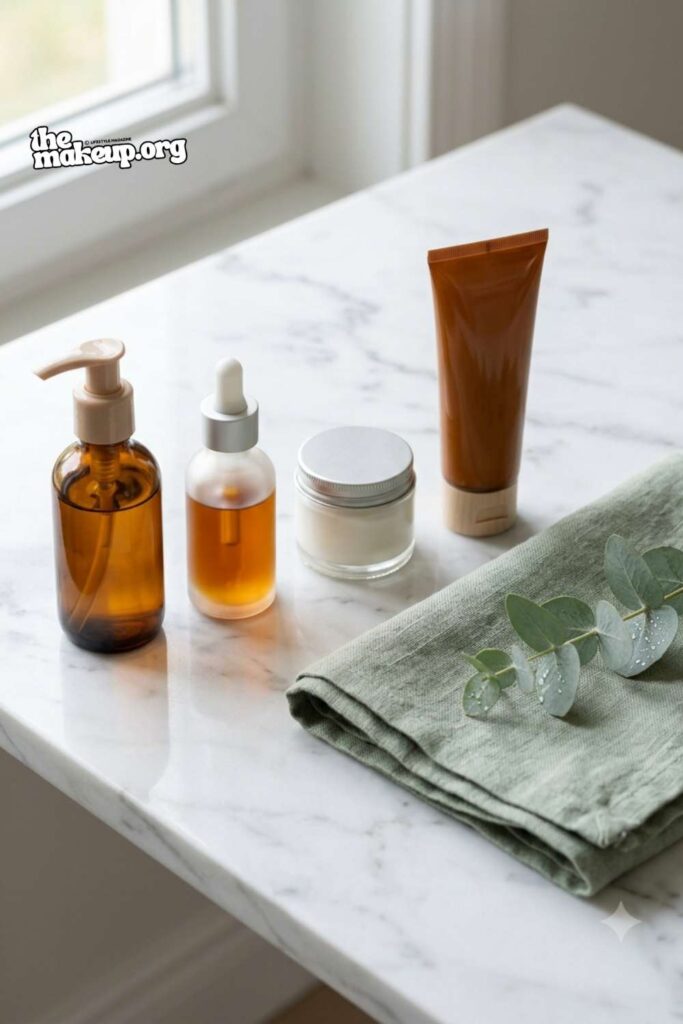
Great skin is the base layer of any glow up. Makeup sits better on skin that’s actually cared for.
Unlike the color prompt, this one leans on your answers more than your photo, so be honest about breakouts, sensitivity, and budget.
Act as a licensed esthetician building me a realistic skincare routine. Interview me first: ask about my skin type, top 2 concerns, any sensitivities, my current products, my budget per product, and whether I want anti-aging focus. After I answer, give me a numbered AM routine and PM routine, name the key ingredient in each step (like niacinamide or retinol) and why it’s there, and flag which two products are “worth spending on” vs. “buy cheap.” Keep it to 5 steps max so I’ll actually do it.
Upload this photo: an optional close-up of your bare skin in daylight so it can spot texture, redness, or congestion, but the interview answers matter most here.
[MY RESULT: note the routine it built, which cheap swap surprised me, and any product that broke me out]
A word of caution: ChatGPT is not a dermatologist. For acne, melasma, or reactions, treat its plan as a starting point and see a pro. Its budget picks are genuinely useful, though. [AFFILIATE: gentle cleanser + niacinamide serum picks]
ChatGPT Hair Color & Cut for Your Face Shape
ChatGPT can suggest a haircut and hair color for your face shape and coloring before you commit at the salon. Give it your face shape, hair texture, and season, and it recommends flattering cuts, lengths, and color directions, the low-risk way to test a big change.
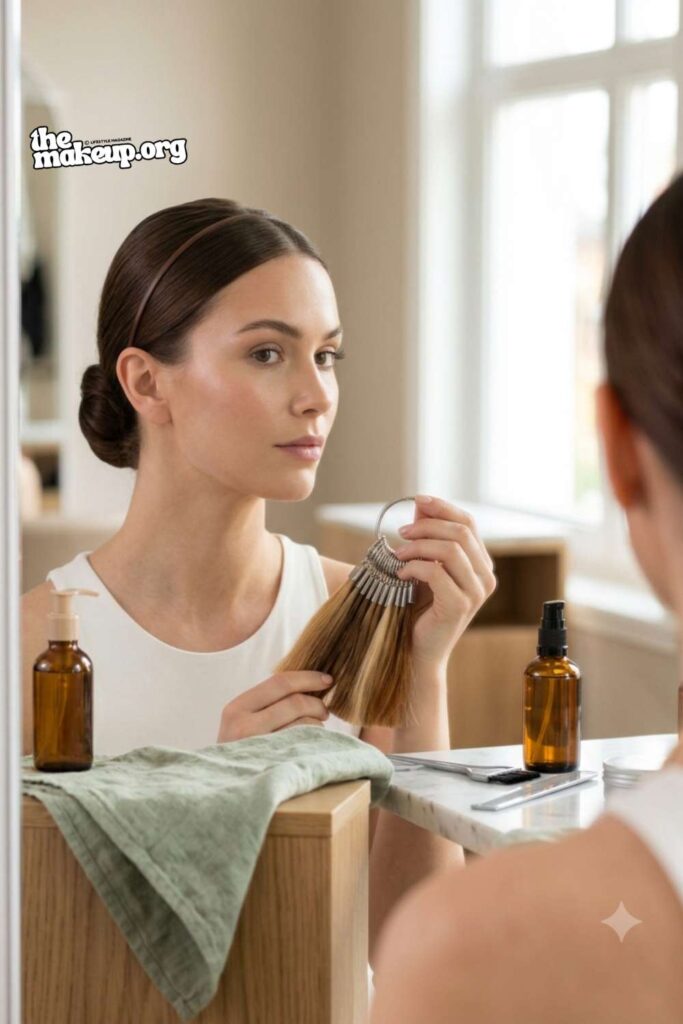
This is the section to read before you do anything you’ll regret. A screenshot beats a bad chop.
Notice this prompt is built as a “second opinion,” not a full makeover, a different shape than the sections above on purpose:
You are a senior hairstylist and colorist giving me a pre-appointment consultation. First ask me: my face shape (or tell me how to measure it), hair texture and density, current color, how much maintenance I’ll tolerate, and my color season if I know it. Then recommend: 3 flattering cuts with the reason each suits my face shape, 2 hair-color directions that complement my undertone (with example shade names to show my stylist), and one “don’t do this” warning for my face shape. Finish with a short script I can read to my stylist.
Upload this photo: a straight-on selfie with your hair fully pulled back so your hairline and jaw are visible, since face shape is impossible to judge with hair covering it.
[MY RESULT: the cut it pushed, the color it warned me off, and whether my stylist agreed]
The “script for your stylist” is the sleeper feature here. It turns a vague Pinterest board into words a professional understands. [AFFILIATE: heat protectant + color-safe shampoo picks]
ChatGPT Makeup Analysis: Undertone, Contour & Shades
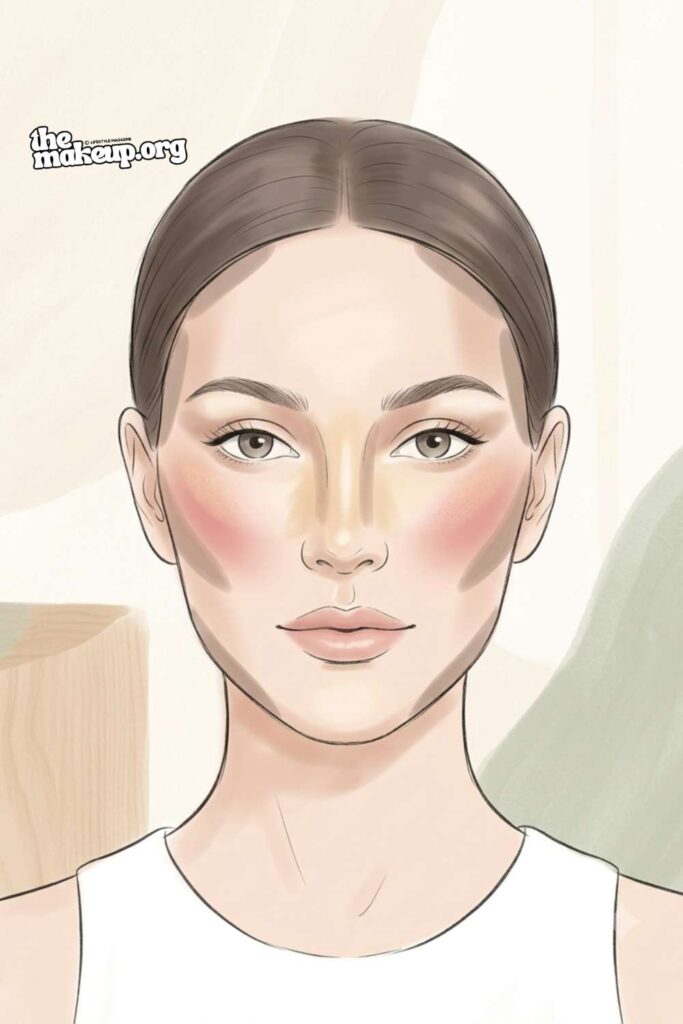
ChatGPT makeup analysis reads your undertone, face shape, and features to recommend foundation shades, blush and lipstick colors, and where to place contour and highlight. It’s like a mini makeup lesson mapped to your actual face.
The payoff: you stop buying foundation that oxidizes orange and blush that disappears.
Here I want a visual, so the prompt asks for a described face map, a new twist versus earlier sections:
You are a professional makeup artist doing a personalized face mapping. Ask me first about my undertone (or how to check it), my face shape, my eye color and shape, and the makeup look I want (natural, glam, or no-makeup makeup). Then give me: my likely foundation undertone and 2 drugstore + 2 higher-end shade ranges to try, blush and lip shades in my color season, and a contour, blush, and highlight placement map described zone by zone (cheekbones, jaw, nose, forehead) so I can follow it like a diagram. Add one product texture tip for my skin type.
Upload this photo: a bare-face, front-facing selfie in daylight, plus a relaxed side-angle shot so it can read your face structure for contour placement.
[MY RESULT: the undertone it called, the blush shade that actually worked, and the placement tip that changed my look]
Fair warning: ChatGPT gives shade ranges, not exact matches. Always swatch in store or order samples before a full-size buy. [AFFILIATE: foundation shade-range + cream blush picks]
ChatGPT as Your Personal Stylist (Kibbe + Body Shape)
ChatGPT can act as a personal stylist using the Kibbe body types and classic body-shape systems to recommend silhouettes that flatter you. Tell it your measurements and proportions, and it explains which necklines, hemlines, and cuts work, and why.
Dressing for your body is the fastest confidence upgrade in a glow up. It’s less about size and more about line and proportion.
This section has the most involved interview, because Kibbe depends on proportion, not just measurements:
You are a wardrobe stylist certified in the Kibbe body-type system and standard body-shape analysis. Walk me through it: ask about my height, shoulder vs. hip width, waist definition, bust and limb proportion, and bone structure (sharp vs. soft), one topic at a time. Then tell me my likely Kibbe type and body shape, with your confidence level, and give me: 5 flattering silhouettes, 3 necklines and 3 hemlines that suit me, fabrics and prints to favor or avoid, and 2 outfit formulas for work and weekend I can copy exactly.
Upload this photo: a full-length photo in fitted clothing (leggings and a tank), standing straight against a plain wall, so it can read your actual proportions rather than guessing.
[MY RESULT: my Kibbe type, the silhouette that clicked, and the “rule” I’m choosing to ignore]
Kibbe is genuinely divisive, and ChatGPT can waffle between two types. Treat it as a lens, not law. [AFFILIATE: flattering-silhouette wardrobe staples pick]
Bonus Glow-Up Prompts (Nails, Brows, Fragrance)
The big four are done, now the finishing touches. These are the quick-hit prompts I keep saved for the little details that pull a glow up together.
Use them one at a time and attach a photo where it helps:
- Nails: “Based on my skin tone and color season, suggest 6 nail polish shades (3 everyday, 3 statement) with example shade names, and tell me which flatter my hand undertone.”
- Brows: “Look at my photo and recommend a brow shape for my face, where to add or remove, and a plain-language guide for my next threading or lamination appointment.” [AFFILIATE: brow pencil + gel picks]
- Fragrance: “Act as a fragrance consultant. Ask me about scents I already love and the vibe I want, then recommend 3 perfume families and 2 specific bottles in each to sample.”
Keep these in your notes app. A five-minute prompt is often the difference between “nice” and “put-together.”
Does ChatGPT Color Analysis Actually Work? (My Honest Take)
Short answer: yes, mostly, with real limits. ChatGPT color analysis is impressively good at undertone and season when you feed it a great photo, but it’s not as precise as a trained analyst draping real fabric on you in person.
Here’s where it genuinely shines:
- Undertone and season are usually right in daylight photos.
- Palettes with hex codes are specific and actually shoppable.
- Explanations teach you why, so you get better at this yourself.
And here’s what it got wrong for me. On one dim photo it called me a warm Autumn; in proper light I’m clearly a cool Summer. It also once invented a “sub-season” that isn’t in any real system, and confidently named a foundation shade that oxidized orange on my skin.
The lesson: ChatGPT is a brilliant free starting point, not the final word. Verify big decisions, like a drastic hair color or an expensive foundation, in real life before you commit.
FAQ
Is ChatGPT color analysis free?
Yes. Image upload and color analysis work on the free ChatGPT tier. A paid plan adds more messages and slightly sharper responses, but you can get a full season read for $0.
Is ChatGPT color analysis accurate?
It’s surprisingly accurate on undertone and season with a good daylight photo, but less precise than a $150 to $300 in-person analysis. Feeding it hex codes improves accuracy noticeably.
What photo should I use?
A bare-face selfie in natural daylight, no filter, hair pushed back, facing the light. Add a shot with white paper by your jaw for a truer undertone read.
Does the glow up actually work?
Yes, when you act on it. The color, skincare, and outfit advice is real and usable. The results come from applying it, not just reading it.
Which model or features do I need?
You just need a version of ChatGPT with image upload, available on the free tier. No special plugin or paid model is required to start.
Can ChatGPT tell my color season, body type, and face shape?
Yes, it can estimate all three from photos and your answers. Body type and face shape are best judged from full-length and hair-back photos, respectively, and results improve the more context you give.
Final Thoughts
A ChatGPT glow up won’t replace a great stylist, but it gets you shockingly close for free, and it teaches you the why along the way. That knowledge sticks long after the chat ends.
Start with color analysis. It’s the biggest payoff for the least effort, and everything else builds on it.
Save the six prompts above, take one honest daylight selfie, and give yourself the makeover this weekend. Then come back and tell me your season. 💛