
Here’s what I’d focus on for Spain in July: breathable linen and cotton pieces you can walk five miles in, leather sandals or sleek sneakers that handle cobblestones, and at least one slightly polished outfit that shifts easily from a long lunch to an evening paseo.
Knowing what to wear in Spain in July is less about packing more and more about packing the right things.
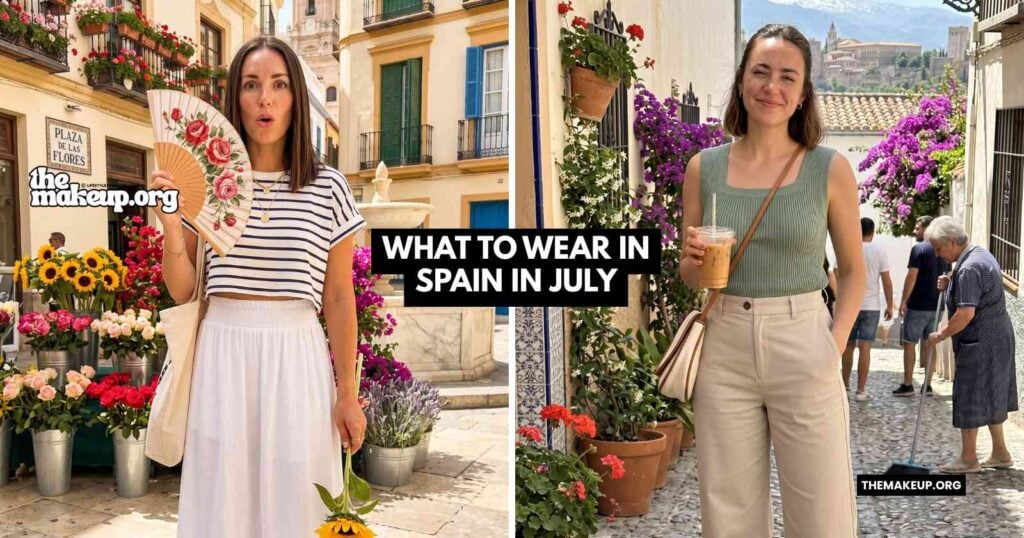
July is genuinely hot. Daytime highs sit between 26°C and 30°C (78°F and 86°F) across most of the country, though cities like Madrid can push past that.
Evenings cool to around 18°C (64°F), which means a single thin layer in your bag is all you need. Locals dress with a relaxed polish; neat, simple, and never athletic unless they’re actually at the gym.
Note: It all depends on where you go in Spain, the nights can be pretty hot, so it is better to check the official weather info depending on where you go.
Spanish street fashion rewards understatement. You’ll fit right in with clean silhouettes, natural tones, and shoes that look intentional.
This guide covers everything from Barcelona and Madrid outfit ideas to the best footwear for old-town streets, plus what to skip and how to dress for churches and rooftop dinners.
What to Wear in Spain in July
Weather and Climate
July is one of the hottest months of the year across Spain. Daytime highs typically land between 26°C and 30°C (78°F and 86°F), and in inland cities like Madrid, temperatures can climb higher for weeks at a stretch.
Coastal areas, including Barcelona and the Costa Brava in Catalonia, often catch sea breezes that make the heat feel more bearable.
Mornings and late evenings are noticeably milder, with temperatures dropping to around 18°C (64°F) after dark. Most days are dry and sunny. A thin layer tucked in your bag handles the occasional breeze or heavily air-conditioned restaurant without taking up much space.
If you’re traveling from June through September, the core wardrobe logic stays consistent: lightweight fabrics, comfortable walking shoes, and one or two slightly smarter pieces for evenings. July simply sits at the warmest end of that window.
Regional Temperature Averages
| Region | Example Destinations | Average High | Average Low |
|---|---|---|---|
| Central & Southern Spain | Madrid, Seville, Córdoba | 33°C to 36°C (91°F – 97°F) | 18°C to 21°C (64°F – 70°F) |
| Mediterranean Coast | Barcelona, Valencia, Málaga | 28°C to 31°C (82°F – 88°F) | 20°C to 22°C (68°F – 72°F) |
| Northern Spain | Bilbao, San Sebastián | 24°C to 26°C (75°F – 79°F) | 15°C to 17°C (59°F – 63°F) |
How Locals Dress ✨
Everyday fashion in Spain has a particular quality that’s hard to pin down but easy to recognize; it looks effortless without being careless. Locals tend to wear well-fitted pieces in simple combinations, and they rarely look rumpled even in the heat. Clean lines and breathable fabrics do most of the work.
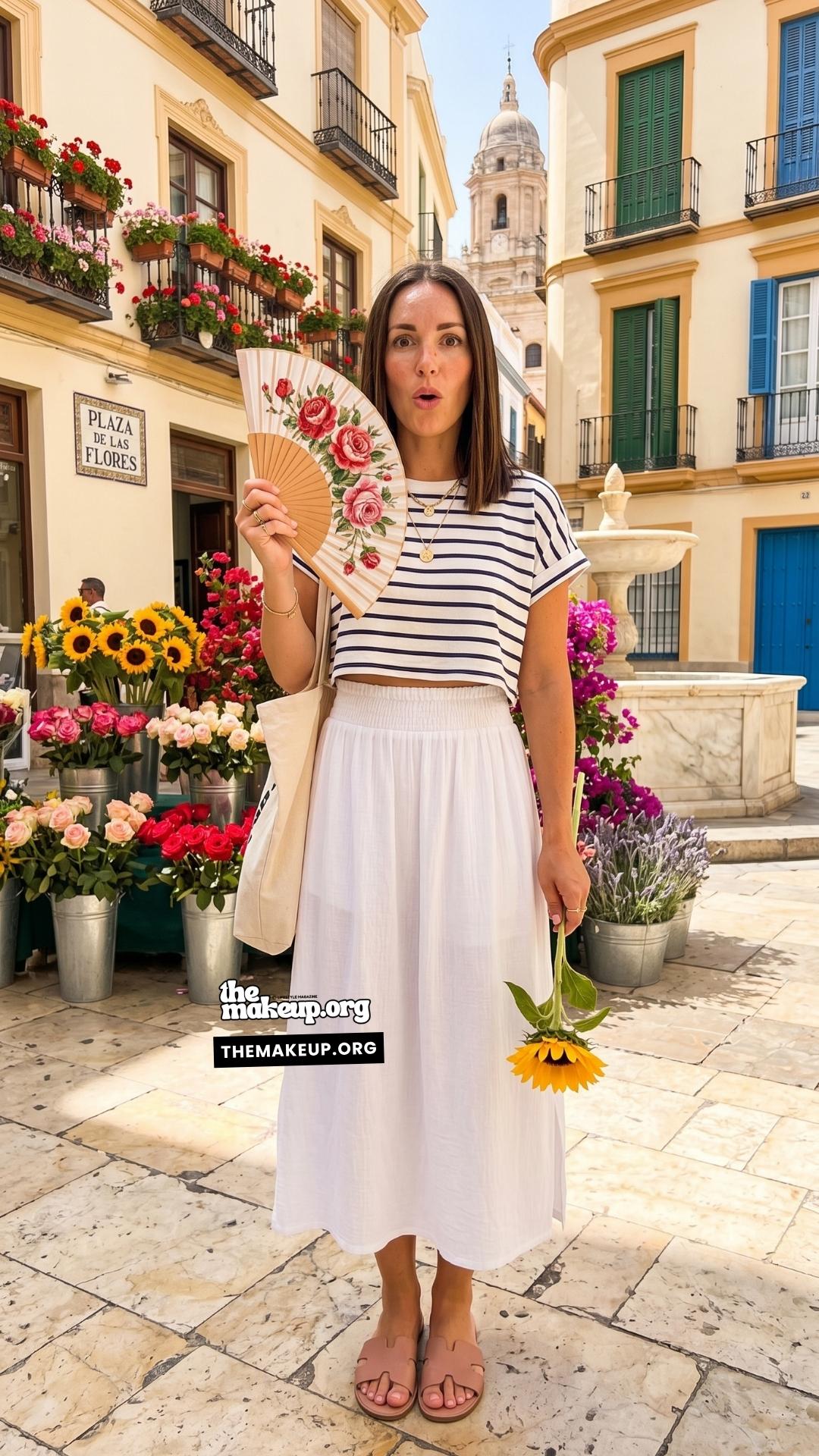
You’ll see plenty of light trousers, fitted shirts, and leather sandals or neat sneakers. Spain outfit style for women often leans toward midi skirts, linen blouses, or a single well-chosen dress rather than lots of layers. Athletic wear stays at the gym. Even casual outfits tend to display a sense of intention.
That said, Spanish style is relaxed and not remotely stuffy. The goal is to look like you dressed with purpose, not like you’re trying too hard. Neutral colors, good fit, and comfortable shoes carry you a long way here.

Outerwear 🧥
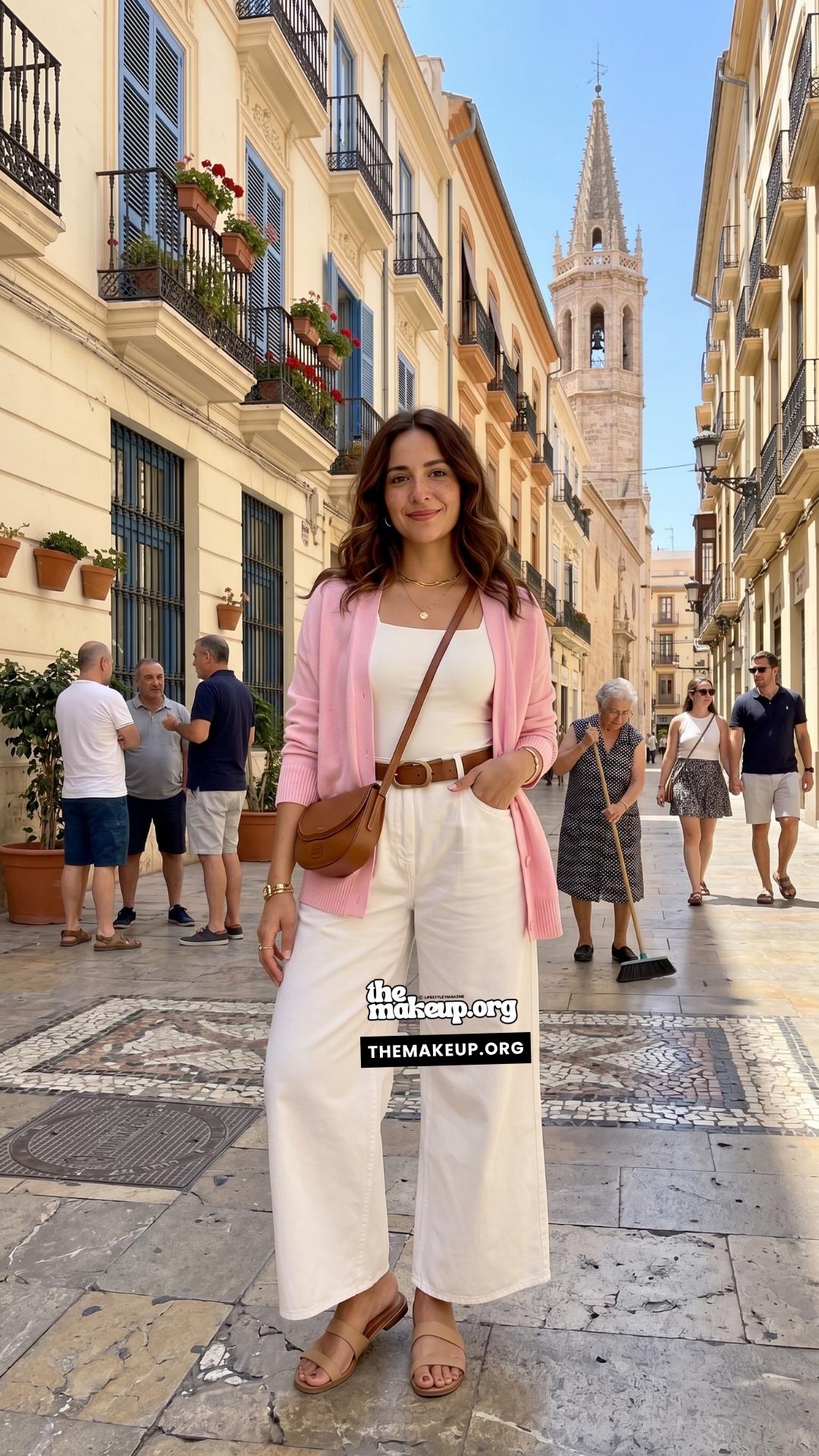
A heavy coat is the one thing you genuinely do not need in July. What you do want is a light jacket or a soft, packable cardigan for evenings. Once the sun drops, temperatures shift quickly, and a thin layer means you can stay out for that late dinner without a second thought.
If your itinerary includes a lot of air-conditioned museums or long lunches in cool restaurant interiors, a slightly structured layer is worth having on hand. A linen blazer works especially well here: it looks polished enough for a nicer evening but breathes well enough that you won’t regret it at noon.
Layers and Fabrics 🧵
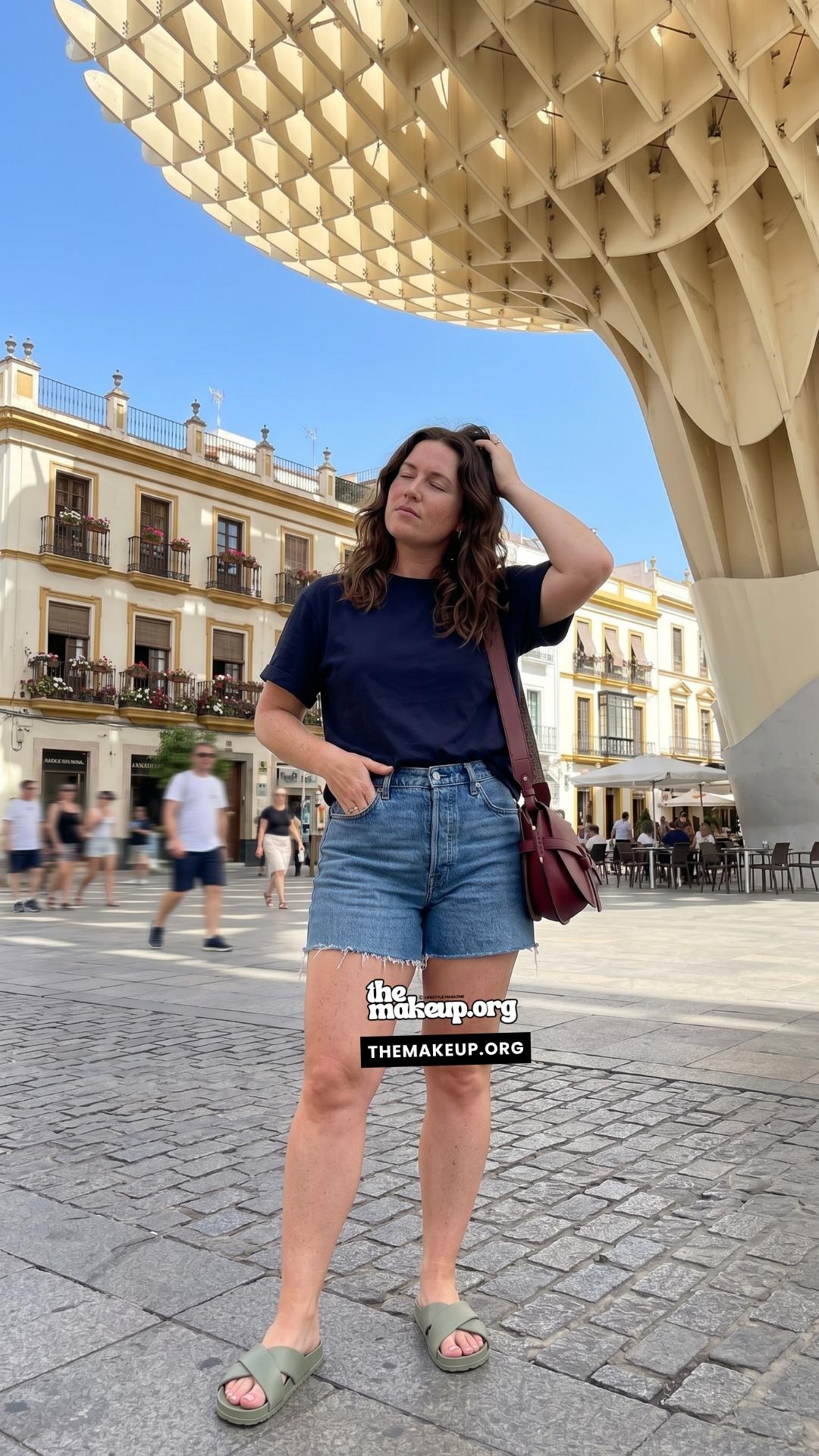
Linen is genuinely the best fabric for Spain in July. It breathes, it looks good even when slightly relaxed, and it dries fast if you’re moving between air conditioning and warm streets all day.
Cotton is a close second, and cotton-linen blends give you a bit of both. These are the fabrics locals reach for, and for good reason.

Avoid anything synthetic that traps heat or anything too structured to pack flat. A light merino knit is useful for evenings if you run cool, but most days you’ll be in a single breezy layer from morning until the temperature drops after sunset.
Tops 👚
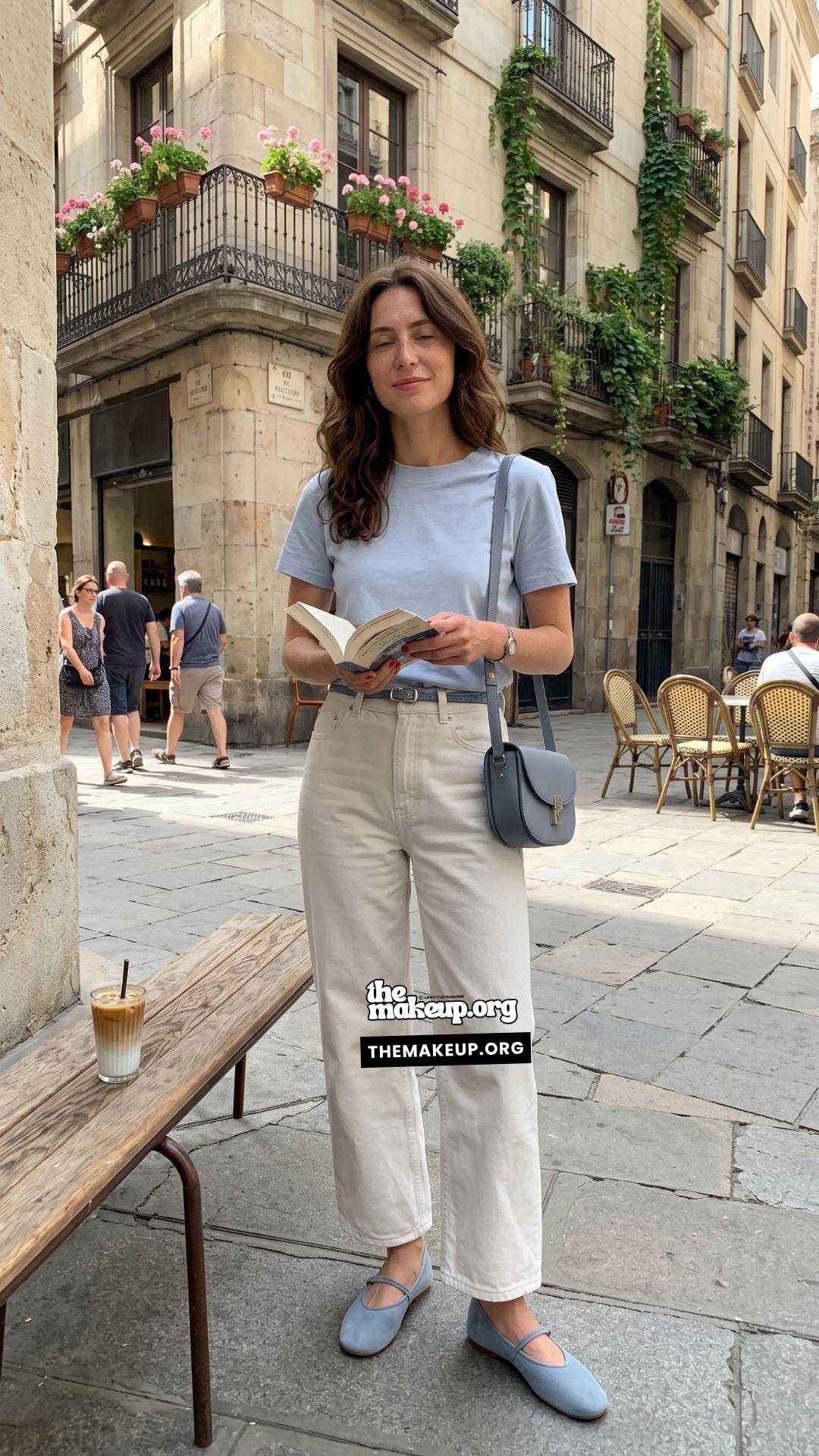
Short-sleeved blouses, loose cotton shirts, and airy linen tops are your workhorses for daytime. A collared shirt in a light fabric reads smart without being formal and keeps you from feeling overdressed at a café or underdressed at a sit-down lunch.
I’d pack one or two slightly dressier tops for evenings. A sleeveless silk-blend blouse or a simple fitted top in a neutral or warm tone gives you flexibility for a nicer restaurant or a rooftop bar without needing a separate evening wardrobe. That single swappable piece is often all you need to shift the whole look.
Bottoms 👖
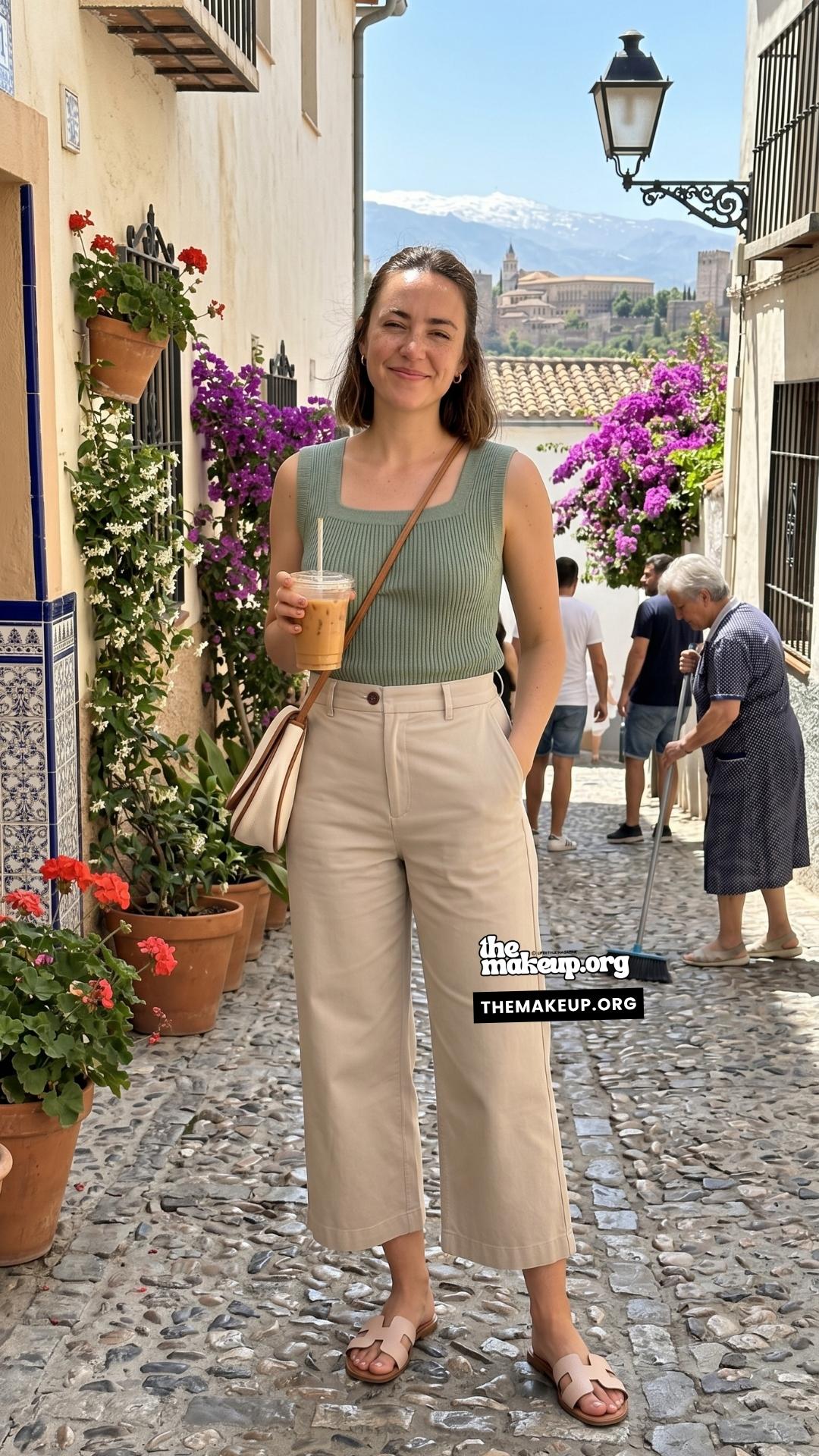
Light trousers in linen or a linen blend are what I’d reach for most days. They handle walking, look polished for lunch or a museum, and transition easily into evening. Culottes and wide-leg styles are popular right now in Spain outfit female casual circles and work especially well in the heat.
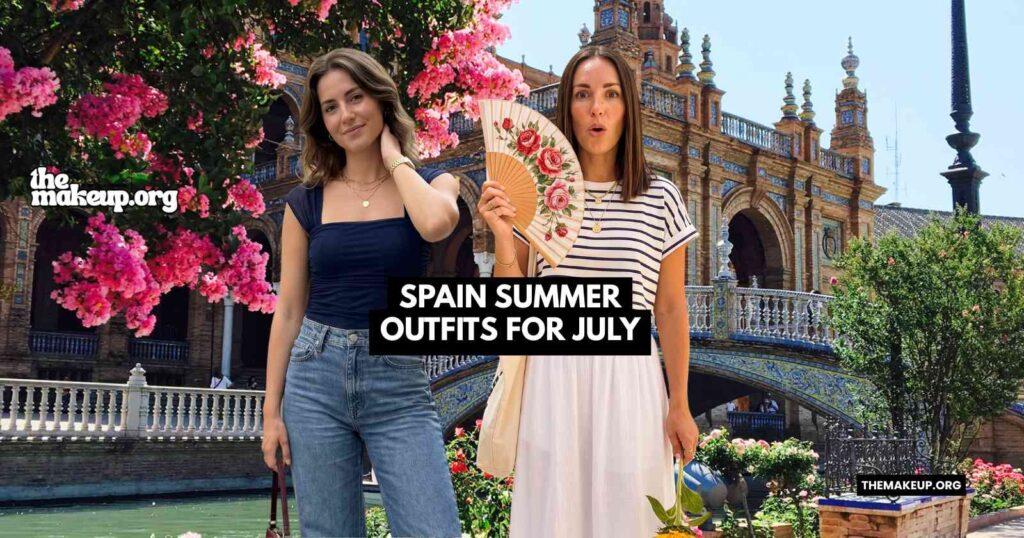
Tailored shorts are fine in most cities, though you’ll want full-length trousers or a longer skirt for churches and some historic sites. If you pack denim, choose a lighter-weight version — standard denim in July heat is genuinely uncomfortable after a few hours of sightseeing.
Aim for bottoms that breathe and look considered rather than thrown on.
Dresses 👗
A simple cotton or linen dress is one of the most practical single items you can pack for Spain in July. Knee-length or midi styles are versatile: cool enough for afternoon exploring, and easy to dress up with a wrap and a nicer sandal for the evening.
I’d bring at least one patterned or slightly more structured dress for nights out. Spain outfit ideas for women often center on a single good dress that carries the day from a morning market through to a late dinner.
Look for a style with pockets if you can find it — endlessly useful when you want to leave the crossbody bag at the hotel.
Barcelona and Madrid Outfit Ideas
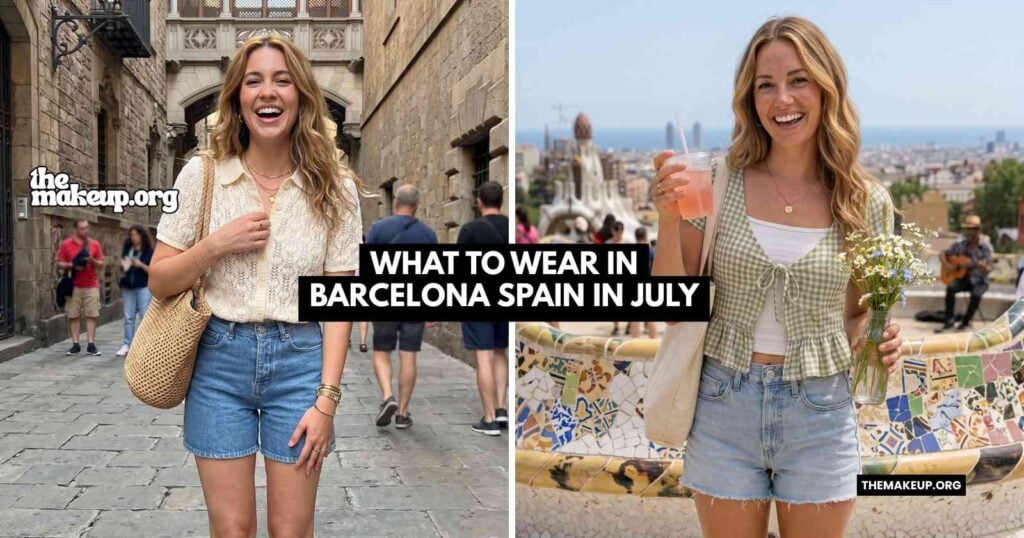
Barcelona’s street fashion in summer leans relaxed and slightly bohemian, especially in neighborhoods like El Born or the Gothic Quarter. A linen midi skirt with a fitted sleeveless top and leather flat sandals is a classic Barcelona combination that works from a morning café stop until late evening.
The city’s Catalonia coastal humidity means you’ll appreciate natural fabrics even more here.
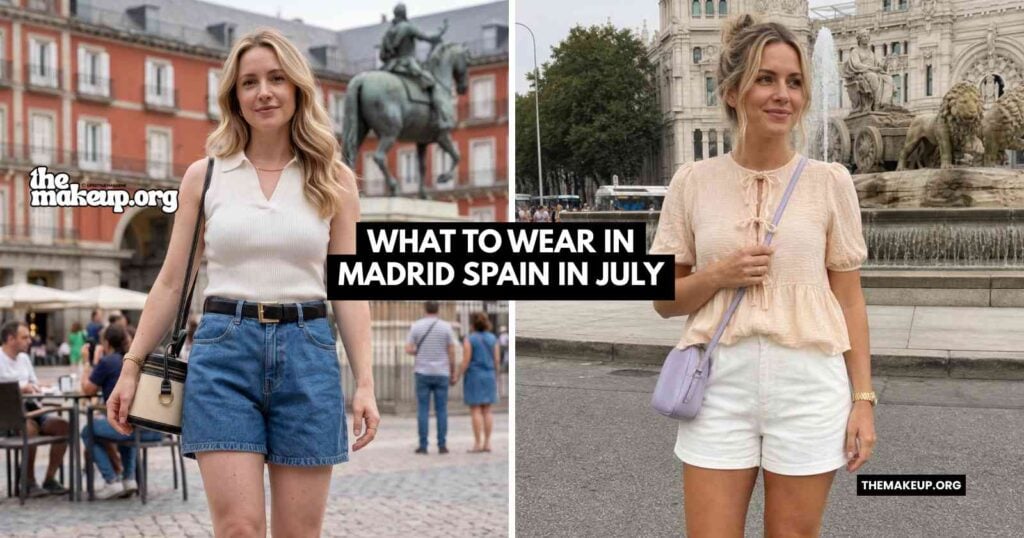
Madrid runs hotter and drier, and the style there tends toward a little more polish. For a day of museums and a rooftop dinner, I’d go with wide-leg linen trousers, a tucked-in cotton blouse, and block-heeled sandals that handle uneven pavement.
At night, Madrid dining starts late — often 9 or 10 pm — so a single well-chosen outfit genuinely needs to carry you for a long stretch.
For both cities, the formula is roughly the same: one breathable layer on top, comfortable and intentional bottoms, shoes that handle cobblestones, and a small crossbody bag. The difference is that Madrid might call for slightly crisper lines, while Barcelona welcomes a bit more relaxed ease.
Shoes 👢
Footwear is where I’d spend the most thought, because Spain’s old-town streets are genuinely uneven and cobblestones are everywhere. Leather sandals with a real footbed — not flat flip-flops — are the local choice and for good reason.
They look intentional, they breathe, and a good pair handles hours of walking without protest.
Sleek leather or canvas sneakers are equally practical and slightly more casual. Avoid anything completely flat with no support, and absolutely do not break in new shoes on this trip.
A blister on day two in Seville or Barcelona can ruin a full week of plans. My honest advice: bring two pairs of broken-in shoes you already trust, and alternate them.
Accessories 🧣
A wide-brimmed sun hat or a lightweight headscarf is genuinely important for midday heat, especially if your itinerary includes outdoor markets or long walks between sights. Sunglasses are non-negotiable. A compact crossbody bag keeps your hands free and your belongings more secure in busy city centers.
A lightweight scarf or pashmina takes up almost no space and earns its place multiple times over: as a shoulder cover for churches, a layer for a chilly museum, or a wrap for a breezy evening on the water. Traditional Spain outfits often incorporate a simple scarf as an accessory, and it’s a habit worth borrowing.
Color Palette and Style Vibe 🎨
White, sand, soft navy, and olive are the tones you’ll see most on Spanish streets in July. They reflect rather than absorb heat, they photograph well in strong Mediterranean light, and they mix easily so you’re not packing a different outfit for every single day.
A single patterned piece or a bold color can look lively and very much in the local spirit — just anchor it with neutral basics. Overall, Spain dressing style in summer is relaxed but considered. The goal is to look like you belong in the picture, not like you’re working hard to get there.
Daytime vs Evening Outfits 🌞🌙
During the day, prioritize function: airy fabrics, a hat, shoes you can walk in for hours, and a bag that leaves your hands free. The hottest position of the day is usually between noon and 4 pm, so lightweight cotton or linen pieces that breathe are essential for that window.
It’s also when you’re most likely to be moving between sights, so comfort is the priority.
Evenings in Spain are a genuine occasion. Dinner rarely starts before 9 pm, and the streets fill up as the temperature drops.
A light swap — a nicer blouse, a pair of block-heeled sandals, a light wrap — takes you from afternoon exploring to dinner without needing to go back to the hotel. That transition is the whole art of packing for a July trip here.
What to Avoid 🚫
Heavy denim, synthetic fabrics that trap heat, and overly athletic clothing are the most common packing mistakes. Visitors also tend to underestimate how much walking they’ll do and pack shoes that look fine but offer no real support.
Uncomfortable footwear turns a great day in an interesting city into a countdown to getting back to the room.
Anything too revealing is worth reconsidering if your itinerary includes churches or more traditional towns. A longer skirt or lightweight trousers in your bag handle those moments without requiring a full outfit change.
And resist the urge to overpack: a compact, well-chosen wardrobe is far easier to manage than a heavy suitcase you’re hauling across cobblestones in 30°C (86°F) heat.
Final Tips and Best Practices ✅
Build around three or four core pieces that genuinely mix and match, and let your accessories shift the look. A linen trouser, a cotton dress, two tops, and one evening blouse can create more distinct outfits than a suitcase full of single-use items.
Think about your actual itinerary — a beach day in Catalonia needs different shoes than a full day of museums in Madrid.
Pack what you know works on your body and in warm weather. Spain’s style culture prizes ease and simplicity, so the most effective approach is always a well-fitting, breathable piece in a neutral tone, worn with quiet confidence.
Final Outfit Checklist 📝
A well-packed July suitcase for Spain typically includes two or three linen or cotton tops, one or two smart bottoms in breathable fabric, a casual summer dress and one slightly more polished option for evenings, a thin cardigan or linen blazer, broken-in walking sandals and a pair of sleek sneakers, a wide-brimmed sun hat, sunglasses, a crossbody bag, and a lightweight scarf.
That’s genuinely all you need. With those pieces, you’re covered from a long morning of sightseeing through to a late dinner, whether you’re in Barcelona, Madrid, Seville, or anywhere in between.
Style in Spain is about feeling like yourself at your most relaxed and most put-together — and that’s a very enjoyable place to land.
FAQ: What to Wear in Spain in July
What should I pack for Spain in July?
Focus on lightweight, breathable fabrics: linen trousers or a linen skirt, cotton tops and blouses, a simple summer dress, and a thin cardigan for evenings. Add broken-in walking sandals or sleek sneakers, a wide-brimmed hat, sunglasses, and a compact crossbody bag.
Keep the palette neutral so everything mixes easily across your trip.
What is the 3-3-3 rule for clothes?
The 3-3-3 rule is a minimalist packing approach where you bring 3 pairs of shoes, 3 bottoms, and 3 tops, mixing and matching to create multiple outfits from very few pieces. It works well for a Spain trip because the style there rewards simple, versatile pieces over variety.
A good linen trouser and two tops genuinely carry you further than five separate outfits.
What is the 3-5-7 rule in packing?
The 3-5-7 packing rule suggests bringing 3 shoes, 5 bottoms, and 7 tops for a longer trip, giving you more combination options without overpacking. For a July trip to Spain, you can often scale this down since the climate is consistent and the style straightforward. Prioritize breathable fabrics over quantity.
What are the best shoes to wear in Spain in July?
Leather sandals with real arch support are the most practical and locally appropriate choice for summer. Sleek canvas or leather sneakers are a close second for long walking days. Avoid brand-new shoes, completely flat sandals with no footbed support, and anything that hasn’t been broken in before your trip.
What is the 97 rule in Spain?
The 97 rule refers to a Spanish labor law provision around employment contracts, not a fashion or travel guideline. If you encountered it in a travel context, it may have been used loosely or out of context.
For packing purposes, the more useful rule is simply to choose natural fabrics, neutral colors, and comfortable shoes.
What two colors should not be worn together?
There are no hard rules, but in Spain’s relaxed summer aesthetic, very bright clashing combinations — neon orange with hot pink, for example — tend to read as touristy rather than stylish. The local approach favors a neutral base with one accent color or pattern.
That said, bold color is welcomed; just anchor it with something simple.
How do locals dress in Spain in summer compared to tourists?
Locals tend to wear well-fitted, intentional pieces in breathable fabrics — linen trousers, fitted blouses, leather sandals — rather than athletic wear or overly casual vacation clothing. The biggest difference is usually footwear: locals choose stylish, supportive shoes while tourists often arrive in flip-flops or heavy sneakers that struggle on cobblestones.
Final Takes
What to wear in Spain in July really comes down to breathable fabrics, comfortable shoes you already trust, and a handful of pieces that shift naturally between daytime sightseeing and a late evening dinner. Linen, cotton, leather sandals, a thin evening layer, and a neutral palette will carry you through the full trip without a wasted item in your suitcase.
Spain’s style culture rewards ease and intention over effort. Pack less than you think you need, focus on fit and fabric, and let the places do the rest of the work. You’ll spend less time managing your luggage and more time actually enjoying one of the best destinations in Europe.