
✨ Cortisol is your body’s primary stress hormone — and while it helps you survive in emergencies, chronic high levels can lead to:
- 😩 Exhaustion
- 😟 Anxiety
- 🌙 Sleep issues
- ⚖️ Weight gain
But instead of jumping into crash diets or extreme cleanses, what your body really needs is support and nourishment. 🥦💧
This guide breaks down a science-backed, gentle cortisol detox approach using food, lifestyle habits, and powerful micronutrients to help you feel balanced again.
What is Cortisol, and Why Do We Need to Detox It?
Your adrenal glands release cortisol in response to stress. It’s helpful in small bursts — like waking up or reacting to danger — but long-term elevated cortisol can throw everything out of balance.
Think:
- 🌙 Trouble sleeping or waking up wired at 3 a.m.
- ⚖️ Belly fat and bloating
- 🍬 Sugar cravings and fatigue
- 😟 Anxiety and irritability
- 🔄 Hormonal imbalances
- 🛡️ Immune dysfunction
On the other hand, low cortisol levels can also cause problems:
- 😴 Chronic fatigue
- ⬇️ Low blood pressure
- 🧂 Salt cravings
- 🌫️ Brain fog
- 😔 Low motivation or depression
💡 The goal isn’t zero cortisol — it’s a healthy cortisol rhythm:
☀️ High in the morning for energy
🌙 Lower in the evening to rest
If you want, I can also make sure your whole cortisol article follows this same clean, visual style so it’s consistent from start to finish.

🌾 Cortisol Detox Diet: How Food Can Heal
Food isn’t just fuel — it’s information for your hormones. Some foods actively help regulate stress and inflammation, while others aggravate them.
❌ Diets That Are Too Restrictive Can Backfire
Overly restrictive diets — such as low-carb, fasting, or low-calorie — can actually increase cortisol because the body sees food scarcity as a threat.
📊 Studies show that chronic dieting raises cortisol and worsens the stress response.
💡 A cortisol detox diet isn’t about restriction — it’s about nourishment, balance, and stability.
🥑 The Cortisol Detox Diet Food List (What to Eat More Of)
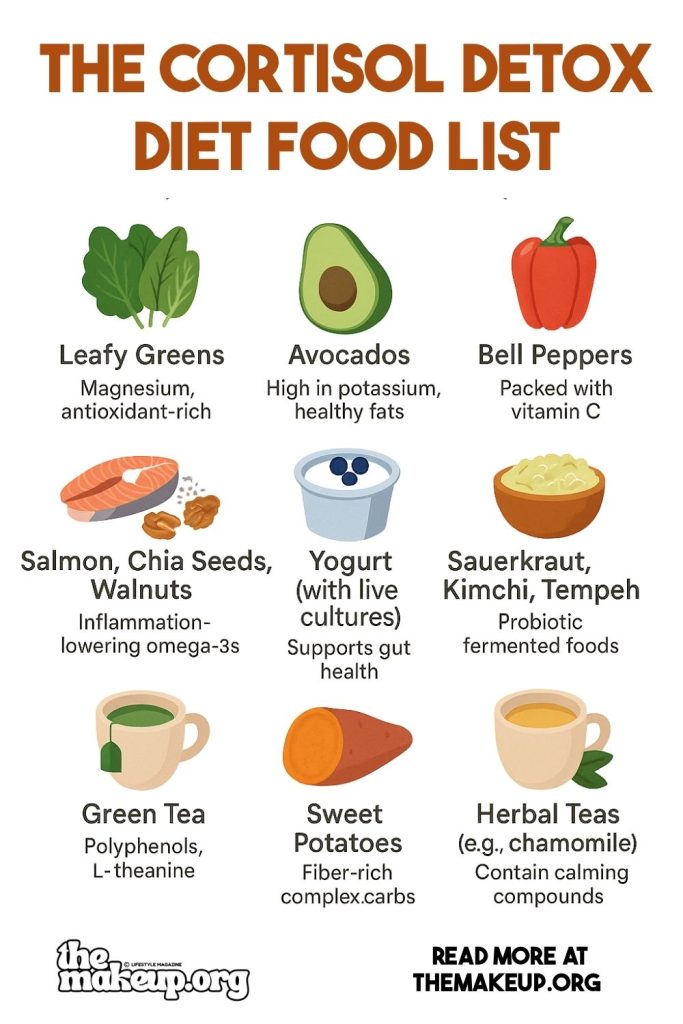
Let’s start with the foundation: food is information, and your body listens to it closely. These ingredients have been shown to support healthy cortisol levels by reducing inflammation, stabilizing blood sugar, and nourishing the nervous system.
💚 Magnesium Heroes
- Spinach, kale, swiss chard
- Avocados
- Pumpkin seeds, sunflower seeds
- Dark chocolate (70%+ cocoa)
- Almonds
Magnesium is like a calming blanket for your nervous system — essential for relaxation and sleep.
🍊 Vitamin C Boosters
- Bell peppers
- Kiwi
- Oranges
- Broccoli
- Strawberries
Vitamin C isn’t just for immunity — it also helps regulate the body’s stress response by reducing the impact of high cortisol.
🧬 Omega‑3 and Anti-Inflammatory All-Stars
- Salmon, sardines, mackerel
- Walnuts, flaxseeds, chia
- Olive oil
These fats help tone down the body’s stress signals and support your brain chemistry.
🌿 Gut & Mood Food
- Yogurt (with live cultures), kefir
- Sauerkraut, kimchi, tempeh
- Oats, legumes, sweet potatoes
A well-fed gut = calmer mind. Fiber and fermented foods support serotonin production and cortisol regulation through the gut–brain axis.
🍵 Calming Sips
- Green tea (rich in L‑theanine)
- Chamomile, lemon balm, or passionflower tea
- Warm water with lemon and turmeric
These teas gently nudge your nervous system toward relaxation — no force needed.
❌ What to Reduce (The Cortisol Spikers)
- Highly processed foods and added sugars
- Too much caffeine (especially without food)
- Alcohol (especially at night)
- Overly restrictive diets or fasting windows
- Long, high-intensity workouts with no rest
Stress doesn’t only come from emotions — your body reacts to everything you consume and how you move.

🛒 Cortisol Detox Grocery List (With Benefits & Warnings)
These foods aren’t just healthy — they’re targeted tools to help regulate your stress response, balance hormones, and nourish your body.
🥬 Leafy Greens (Spinach, Kale, Swiss Chard)
✅ Benefits: High in magnesium, folate, and antioxidants that support nervous system regulation and reduce inflammation.
⚠️ Caution: If you take blood thinners (like warfarin), high vitamin K levels may interact. Talk to your doctor about balance.
🥑 Avocados
✅ Benefits: Loaded with potassium, healthy fats, fiber, and magnesium — all great for reducing cortisol and supporting brain function.
⚠️ Caution: Calorie-dense, so portion control matters if you’re watching energy intake for other health reasons.
🌶️ Bell Peppers (Red, Yellow)
✅ Benefits: Extremely high in vitamin C, which helps buffer cortisol and support immune health. Also rich in antioxidants.
⚠️ Caution: Generally safe, but can cause bloating in people with sensitive digestion or IBS.
🥦 Broccoli
✅ Benefits: Contains sulforaphane (supports detoxification), vitamin C, fiber, and compounds that aid hormonal balance.
⚠️ Caution: May cause gas or bloating in sensitive individuals if eaten raw or in excess.
🍠 Sweet Potatoes
✅ Benefits: Complex carbs stabilize blood sugar, which keeps cortisol levels from spiking. Great source of fiber and beta-carotene.
⚠️ Caution: Safe for most; just monitor portion size if you’re managing blood sugar (they still contain natural sugars).
🥝 Kiwis, Berries, Oranges
✅ Benefits: Vitamin C powerhouses. Kiwis and berries are also high in fiber and antioxidants that combat inflammation and oxidative stress.
⚠️ Caution: Acidic fruits like oranges and kiwi may trigger reflux in some individuals.
🧅 Onions, Garlic, Tomatoes
✅ Benefits: Anti-inflammatory, rich in antioxidants and sulfur compounds that support liver detoxification (key for hormone balance).
⚠️ Caution: Can aggravate reflux or IBS symptoms in sensitive guts (especially raw garlic/onions).
🌾 Rolled Oat
✅ Benefits: Complex carbs rich in fiber help balance blood sugar and increase serotonin — a mood stabilizer.
⚠️ Caution: Choose certified gluten-free oats if you’re sensitive or celiac.
🍚 Brown Rice or Quinoa
✅ Benefits: Whole grains offer steady energy and magnesium, reducing cortisol-triggered crashes and cravings.
⚠️ Caution: Quinoa contains saponins, which may irritate digestion if not rinsed well.
🌱 Chia, Flax, Pumpkin Seeds
✅ Benefits: Packed with omega-3s, fiber, and minerals that lower inflammation and support brain health. Great for hormone balance.
⚠️ Caution: Flax and chia swell in the gut — drink water to avoid bloating or constipation.
🥜 Almonds, Walnuts
✅ Benefits: Protein, magnesium, and healthy fats to keep your blood sugar — and mood — stable.
⚠️ Caution: High in calories; portion matters. May trigger allergies in some.
🫒 Olive Oil (Extra Virgin)
✅ Benefits: Anti-inflammatory and rich in monounsaturated fats that protect your brain and reduce cortisol-related damage.
⚠️ Caution: None when used in moderation, but avoid cooking at very high heat (can degrade its benefits).
🐟 Canned Sardines or Salmon
✅ Benefits: Omega‑3s help calm the nervous system, lower inflammation, and reduce cortisol surges. Sardines also contain calcium.
⚠️ Caution: Check for sodium content; some canned versions are very salty.
🌰 Lentils, Chickpeas
✅ Benefits: Fiber-rich legumes help with blood sugar stability and offer plant-based protein. Support gut health too.
⚠️ Caution: May cause gas or bloating — soak or rinse well before cooking.
🥣 Greek Yogurt (Unsweetened)
✅ Benefits: High in protein and probiotics to support gut–brain health and serotonin production.
⚠️ Caution: Dairy sensitivity can cause digestive issues. Choose plant-based alternatives with live cultures if needed.
🍵 Green Tea & Herbal Teas
✅ Benefits: Green tea contains L-theanine, which promotes calm without drowsiness. Herbal teas like chamomile and lemon balm calm the nervous system.
⚠️ Caution: Green tea still has caffeine; avoid late in the day if you’re sleep-sensitive.
🍫 Dark Chocolate (70% or Higher)
✅ Benefits: Contains magnesium, flavonoids, and theobromine — all known to support mood and reduce stress.
⚠️ Caution: Can be stimulating for some. Stick to 1–2 small squares and watch for added sugars.
Produce:
✓ Leafy greens (spinach, kale, chard)
✓ Avocados
✓ Bell peppers
✓ Broccoli
✓ Sweet potatoes
✓ Kiwi, berries, oranges
✓ Onions, garlic, tomatoes
Pantry & Protein:
✓ Rolled oats
✓ Brown rice or quinoa
✓ Chia, flax, pumpkin seeds
✓ Almonds, walnuts
✓ Olive oil
✓ Canned sardines or salmon
✓ Lentils, chickpeas
✓ Greek yogurt (unsweetened)
✓ Green tea, herbal teas
✓ 70% dark chocolate

🌍 Micronutrients That Lower Cortisol
- Magnesium: calms the nervous system (greens, seeds, avocado)
- Vitamin C: helps the body recover from stress (peppers, kiwi, berries)
- B Vitamins: especially B6 and B12 for neurotransmitters (whole grains, eggs, legumes)
- Omega-3s: reduce inflammation and cortisol spikes (salmon, walnuts, flaxseed)
- Probiotics: improve gut health and lower stress markers (yogurt, kimchi, sauerkraut)
🙏 Other Natural Ways to Reduce Cortisol
⏰ 1. Get Sunlight in the Morning
Exposure to natural light in the first 30–60 minutes after waking helps reset your circadian rhythm, boosts serotonin (a cortisol balancer), and improves nighttime melatonin.
💭 2. Deep Breathing or Meditation
Just 5 minutes of diaphragmatic breathing or mindfulness meditation can significantly lower cortisol, heart rate, and blood pressure. Try box breathing: inhale 4s, hold 4s, exhale 4s, hold 4s.
💤 3. Prioritize Sleep
Deep, restorative sleep is essential for adrenal recovery. Avoid screens before bed, keep the room dark, and try magnesium or herbal teas if needed.
✌️ 4. Gentle Movement
Regular low-impact exercise like yoga, walking, stretching, or dancing releases endorphins and lowers cortisol without adding physical stress to the body.
🤝 5. Social Connection
Spending time with loved ones, sharing a laugh, or even petting your dog can instantly lower cortisol and increase oxytocin.
⚡️ 6. Limit Overtraining and Overworking
Balance hustle with recovery. Chronic stress from work or intense workouts without downtime elevates cortisol long-term. Take real breaks.
🌱 7. Grounding and Nature Time
Walking barefoot in the grass, gardening, or simply being in nature calms the nervous system and lowers inflammation.
📝 8. Gratitude Journaling
Taking 5 minutes daily to write what you’re thankful for helps shift your nervous system out of survival mode and into trust and safety.
💬 9. Avoid Overbooking Your Life
Constant busyness = constant cortisol. Protect your calendar like it’s your nervous system’s sacred space. Say no more often.
🚶 10. Move — But Don’t Overdo It
Moderate movement (walking, dancing, stretching) reduces stress hormones. But high-intensity training with no recovery can keep cortisol stuck in overdrive.
❓ Stress-Reducing Foods Q&A
Q: Can food really help reduce cortisol?
A: Yes! Foods rich in magnesium, vitamin C, and omega-3s can directly impact stress responses. They support the nervous system and hormone production.
Q: Should I avoid carbs on a cortisol detox?
A: Absolutely not. Your brain needs carbs. Complex carbs (like sweet potatoes and oats) help balance blood sugar and reduce stress hormones.
Q: What should I eat before bed to lower cortisol?
A: Try Greek yogurt with berries, a banana with almond butter, or a cup of chamomile tea.
Q: How fast can I feel the effects?
A: Some people notice better sleep and mood within a week. But consistency is key. It’s a long-term game.
Q: Should I take supplements instead of eating these foods?
A: Food comes first. Supplements can help, but they’re best used to fill specific gaps with professional guidance.
📅 7-Day Cortisol Detox Diet Plan (Sample Day
Breakfast: Overnight oats + chia + kiwi + almond butter
Lunch: Grilled salmon + quinoa + steamed broccoli + olive oil
Snack: Pumpkin seeds + green tea
Dinner: Lentil stew + leafy greens + avocado slices
Optional: Chamomile tea before bed
🎓 Educational Nuggets
- Cortisol isn’t bad — we need it to survive. The goal is balance, not elimination.
- Your gut and brain are in constant conversation. Feed one to support the other.
- Diet culture often raises cortisol through restriction, shame, and exhaustion. This plan avoids that entirely.
- Healing your stress response takes time, but every small act (a deep breath, a nourishing meal) counts.
📃 Resources
- Journal of Clinical Endocrinology & Metabolism (on cortisol rhythms)
- Psychoneuroendocrinology Journal (micronutrients and stress)
- American Journal of Clinical Nutrition (diet and cortisol)
- International Journal of Behavioral Medicine (exercise and cortisol response)
- Harvard Health Publishing (stress and adrenal health)