
Your summer trip is about to be booked, or maybe you are just looking around. But if you are sure you are going to Japan, you are certainly wondering What to Wear in Japan in summer!
Dressing in Japan in Summer comes down to one core principle: dress for heat, humidity, and constant movement.
Temperatures climb well above 25°C in cities like Tokyo and Kyoto, and the humidity makes even mild days feel intense. The right fabrics and silhouettes will carry you from a shrine visit to a restaurant dinner without a second thought.
Japanese women tend to dress neatly and practically, favoring covered silhouettes that work equally well indoors and out. Keeping that balance in mind, this guide walks through every category, from shoes to color palette, so you can pack with confidence.
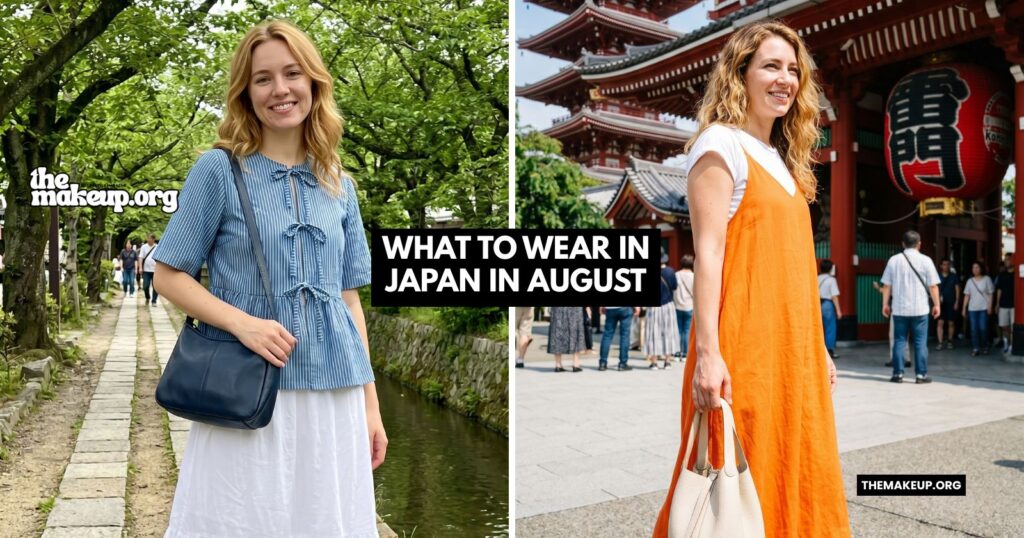
What to Wear in Japan in Summer
Weather & Climate
Japanese summers generally range from 18°C to 30°C (64°F–86°F). Mornings and evenings can feel mild, but midday in Tokyo or Kyoto often brings strong heat and heavy humidity. Sudden rain showers can arrive without warning, so a little planning goes a long way.
Keep in mind that indoor spaces are almost always air-conditioned, sometimes aggressively so. Dressing in light layers makes it far easier to stay comfortable as you move between humid streets and cool interiors throughout the day.
How Locals Dress ✨
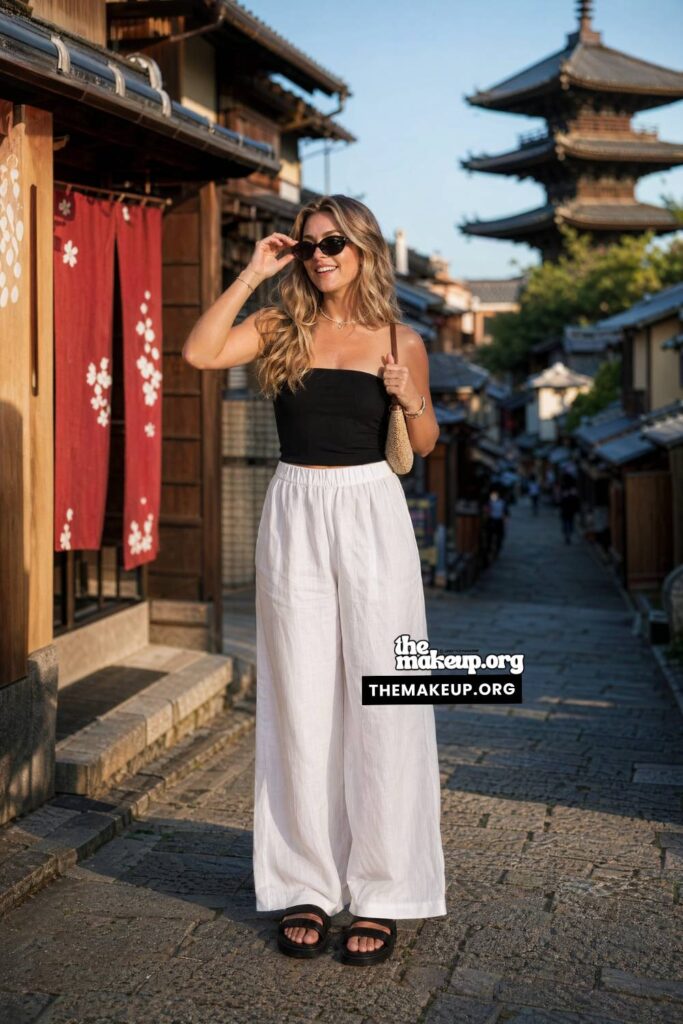
Locals opt for relaxed, tidy silhouettes that are practical for walking and daily travel.
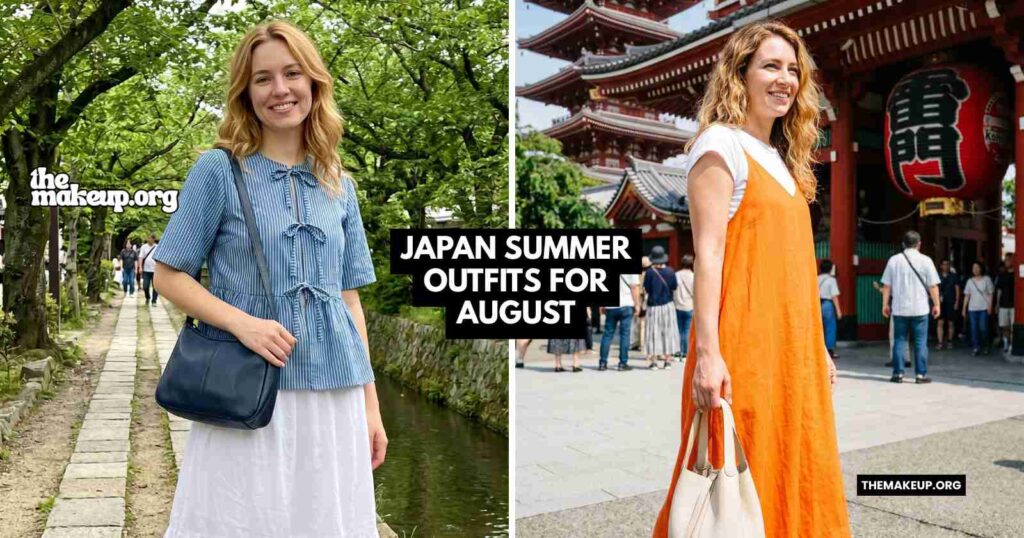
Simple light tops and comfortable trousers or long skirts are common, with breathable button-up shirts used for both style and sun coverage.
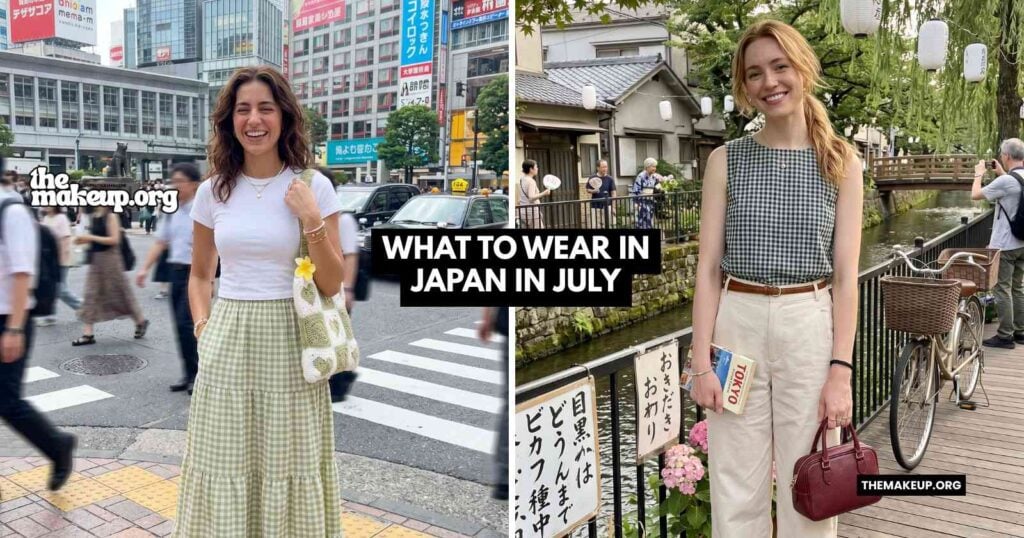
Japanese women, in particular, tend to keep things polished without looking overdressed.
The focus tends to be on clothes that look neat without being flashy. You’ll often see cotton, linen blends, or other easy-care fabrics on the street.
Clean lines and thoughtful layering blend in far better than anything loud or oversized.
What NOT to Wear in Japan 🚫
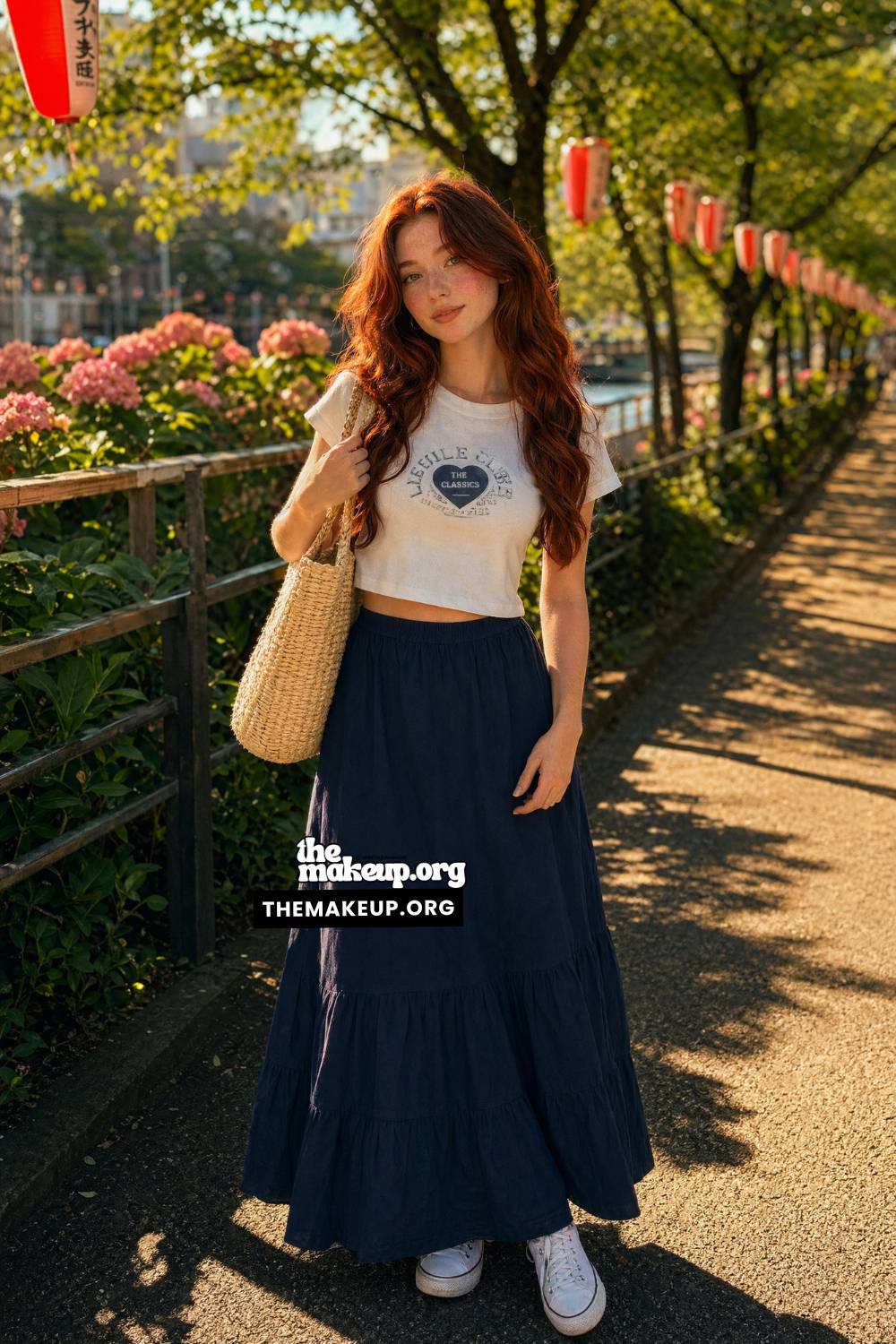
Knowing what not to wear in Japan is just as useful as knowing what to pack. Very revealing clothing, including extremely short hemlines and low-cut tops, can feel out of place when you’re moving through traditional neighborhoods, temples, or local shopping streets.
Heavy fabrics and bulky layers are the other common misstep. They quickly become uncomfortable in the heat, and they make navigating crowded trains far harder than it needs to be.
Loud, graphic prints are not typical street wear for women here, so if blending in matters to you, keep patterns subtle.
For women specifically, it helps to think about how to dress in Japan as a tourist before you start packing.
The goal is neat and comfortable rather than trendy or attention-grabbing.
Outerwear 🧥
Thick jackets and coats have no place in Japanese summers.
The only outerwear worth bringing is a very light packable rain jacket for unexpected downpours, or a thin cardigan for the strong air conditioning found in shops, trains, and restaurants.
If you start your day early or plan to stay out after dark, a soft layer is almost always enough. Anything heavier will feel like a burden by mid-morning.
Layers & Fabrics 🧵
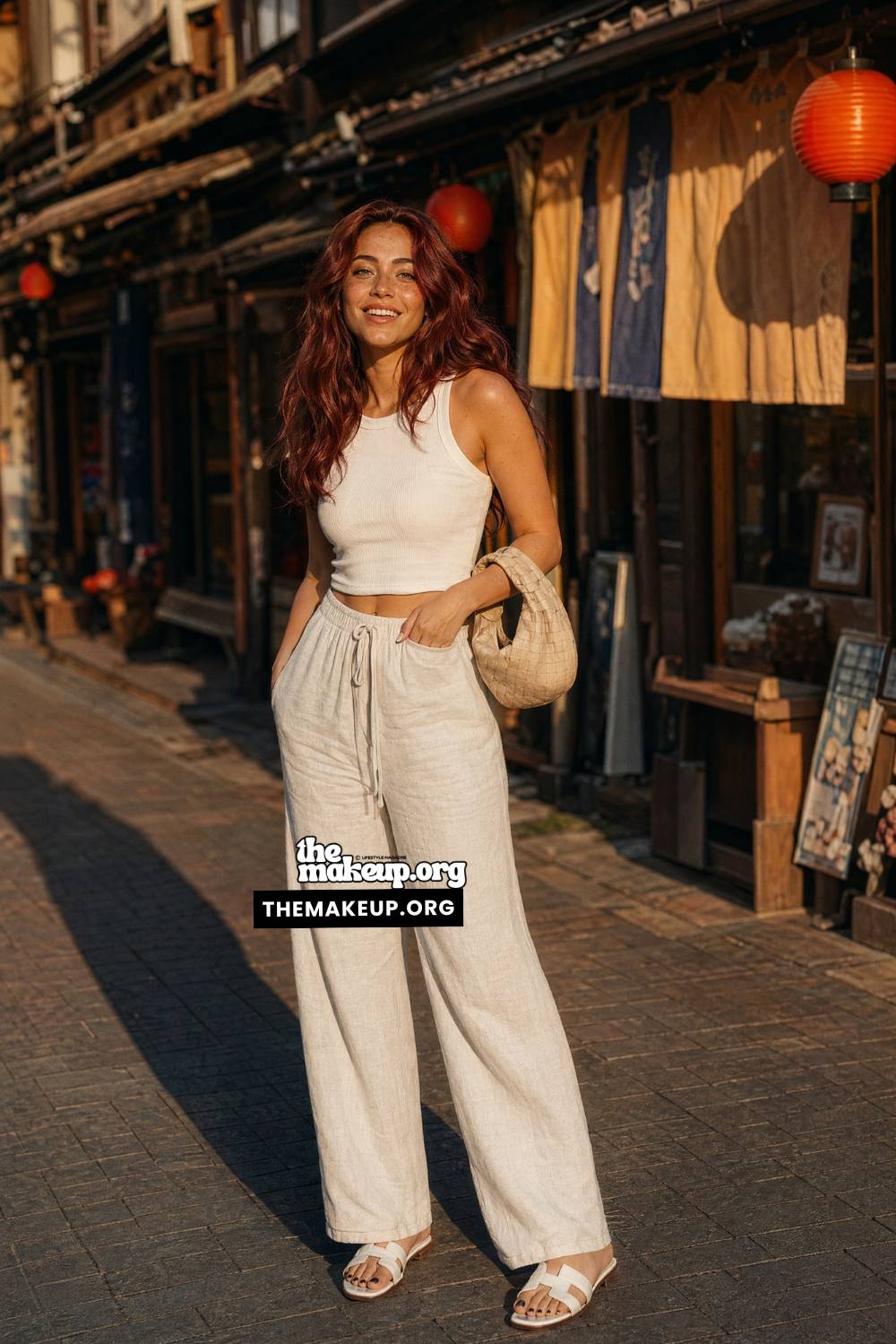
Choose natural, breathable fabrics like cotton and linen wherever possible. These keep you cooler during humid spells and help you avoid the clingy, uncomfortable feeling that some synthetic fabrics bring in the heat.
Very thin layers, such as an unlined shirt or a breezy overshirt, help you adjust to indoor temperature swings without adding bulk to your outfit.
Having that extra layer tucked in your bag means you are always prepared, whether the setting is a shaded garden in Kyoto or a chilly subway carriage in Tokyo.
Tops 👚
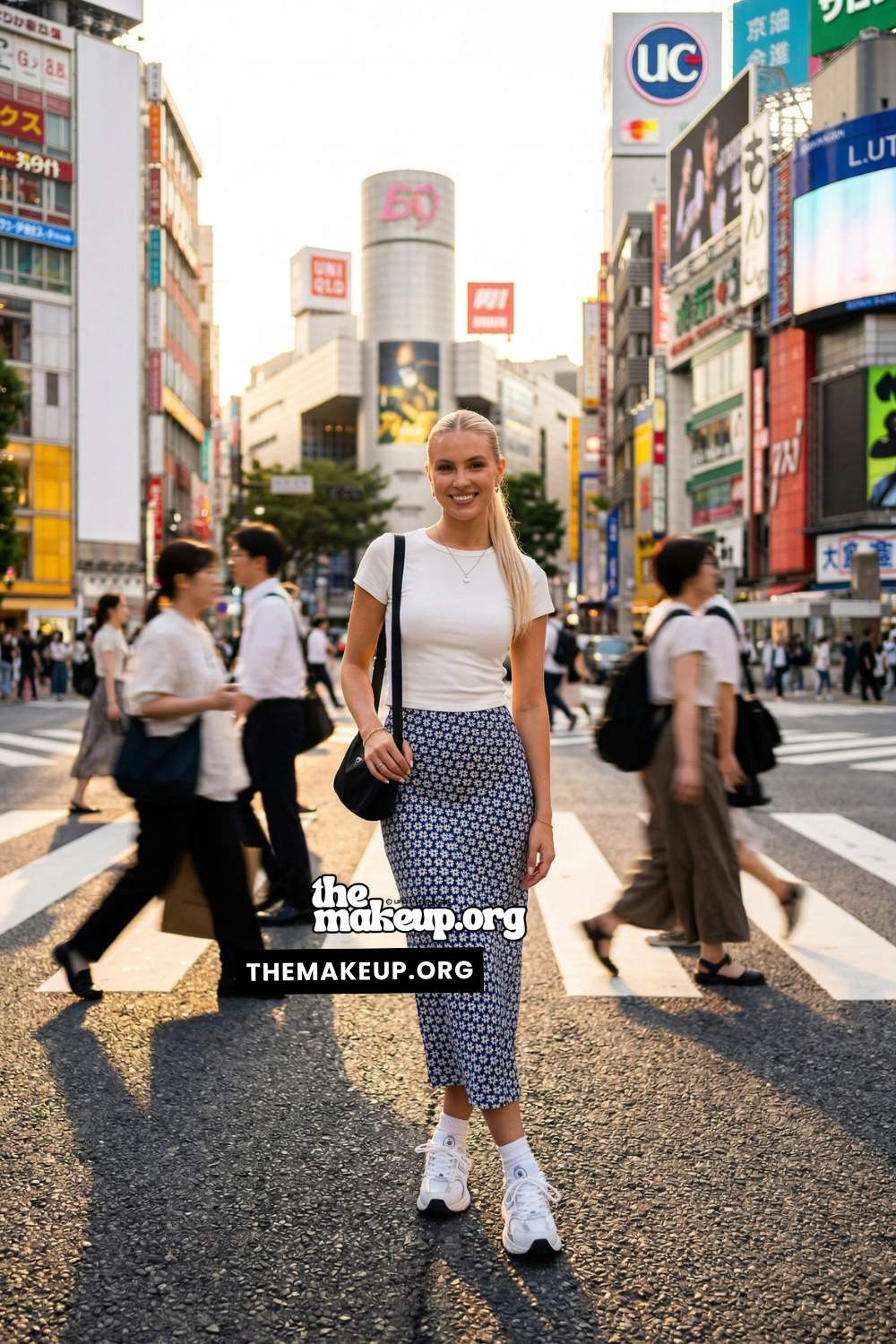
Short-sleeve shirts, airy blouses, and sleeveless tops work well in the heat, but many locals still favor loose coverage to protect against sun and stay polished throughout the day.
Button-downs in a light material offer both ventilation and a put-together look that travels well from morning to evening.
Tank tops are fine for very humid days, but a drapey layer over them adds a layer of comfort on subways and in air-conditioned interiors.
The extra piece also helps when visiting shrines or temples, where slightly more covered dress is appreciated.
Bottoms 👖
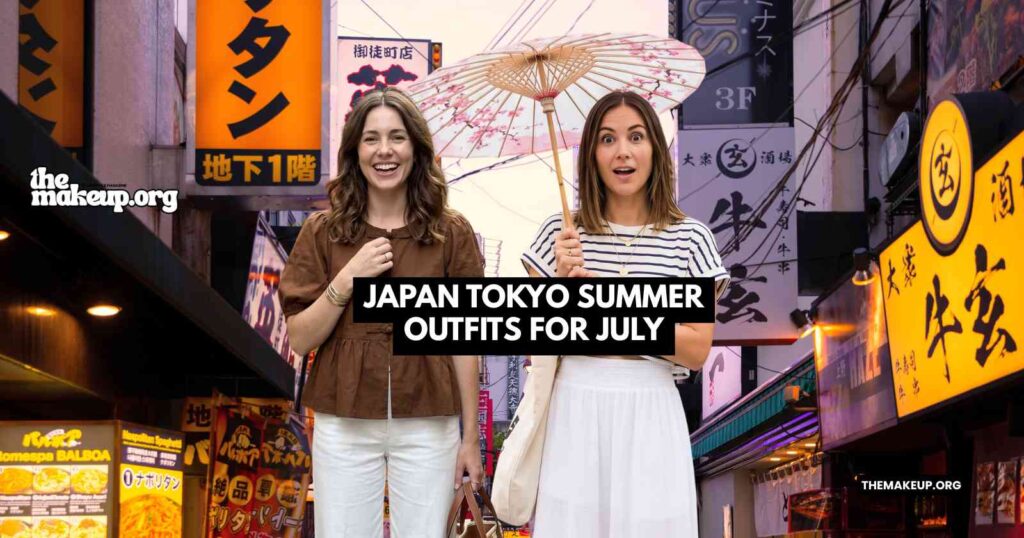
Lightweight trousers and long skirts are everywhere on summer streets, offering sun protection and easy movement for long days of walking. Shorts are less common for adults outside casual or outdoor areas, so longer, looser cuts will make you feel most at ease.
If you plan to cover serious ground on foot, think about comfort and coverage first when you choose your bottoms. Fabrics that dry quickly are genuinely helpful when a shower arrives without warning.
Dresses 👗
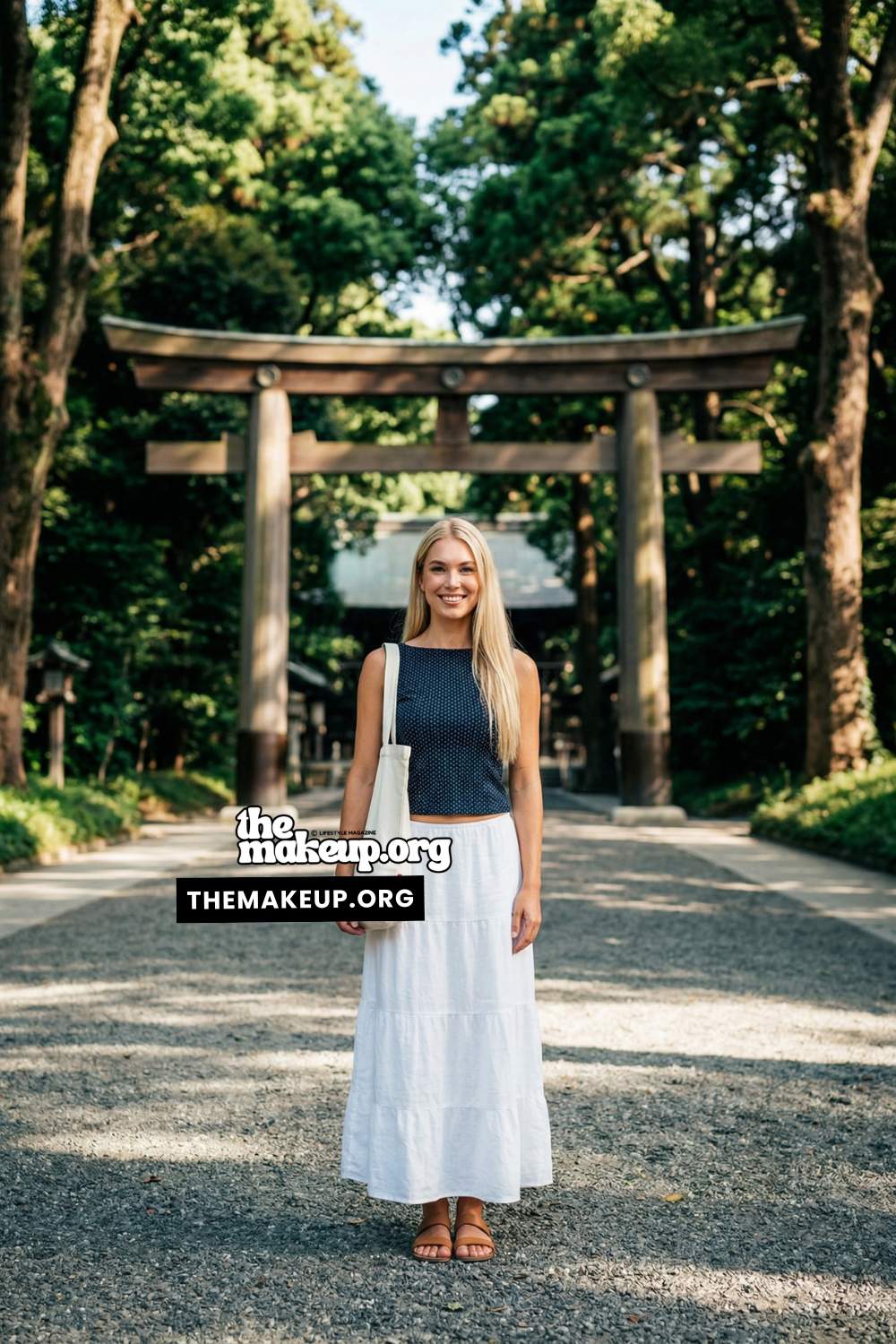
Loose midi-length dresses in airy fabrics are one of the easiest things to pack for a summer trip. They travel without wrinkling badly, they move well in heat, and they pair effortlessly with a light jacket or cardigan when the temperature drops indoors.
Very short dresses are not the norm for city wear, but any dress that is comfortable and allows free movement will fit right in on streets from Tokyo to Kyoto.
Shoes 👢
Comfortable sneakers or supportive sandals are essential. Even a relaxed day of sightseeing involves a surprising amount of walking, and your shoes will make or break the experience. Closed shoes are a smart choice if rain is in the forecast, since wet streets and delicate footwear are a frustrating combination.
Keep your shoes practical and sturdy. Slip-on styles are helpful when you need to remove your shoes quickly before entering certain indoor spaces, so having footwear that comes on and off easily saves time and avoids awkward moments. Boots are not a summer staple here, but a clean, supportive pair of walking shoes or low-profile sneakers will serve you far better than anything fragile or hard to manage.
Accessories 🧣
A small, packable umbrella is invaluable during the rain bursts that appear throughout Japanese summers. Many locals carry one all season, and you will quickly understand why after your first afternoon shower. Lightweight hats or visors offer further sun protection on long outdoor days.
A simple scarf or shawl does double duty: it keeps the chill of strong air conditioning at bay and can also be used as a light cover at shrines or temples when needed. Crossbody bags make it easy to navigate busy stations and crowded streets, keeping your hands free for maps, tickets, or a street food snack.
Color Palette & Style Vibe 🎨
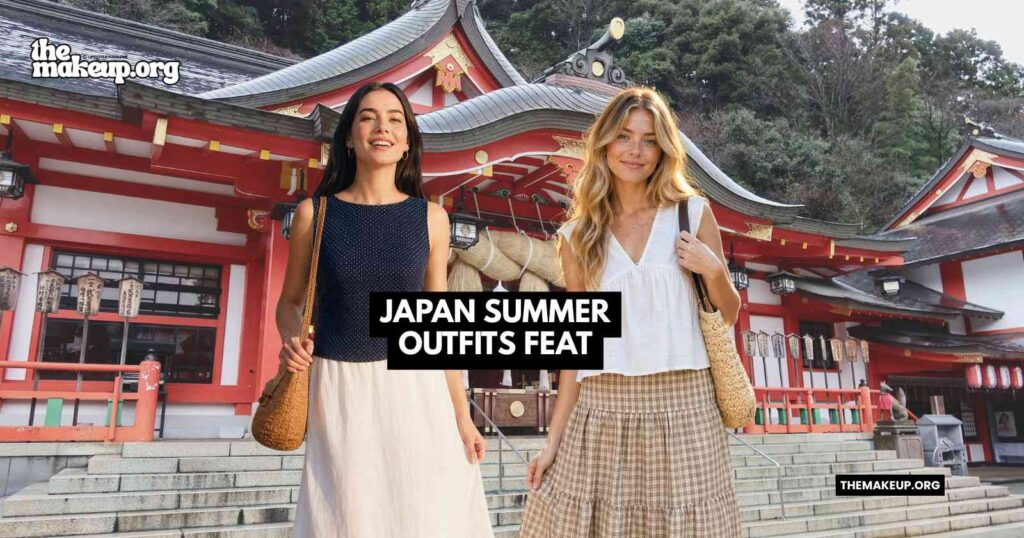
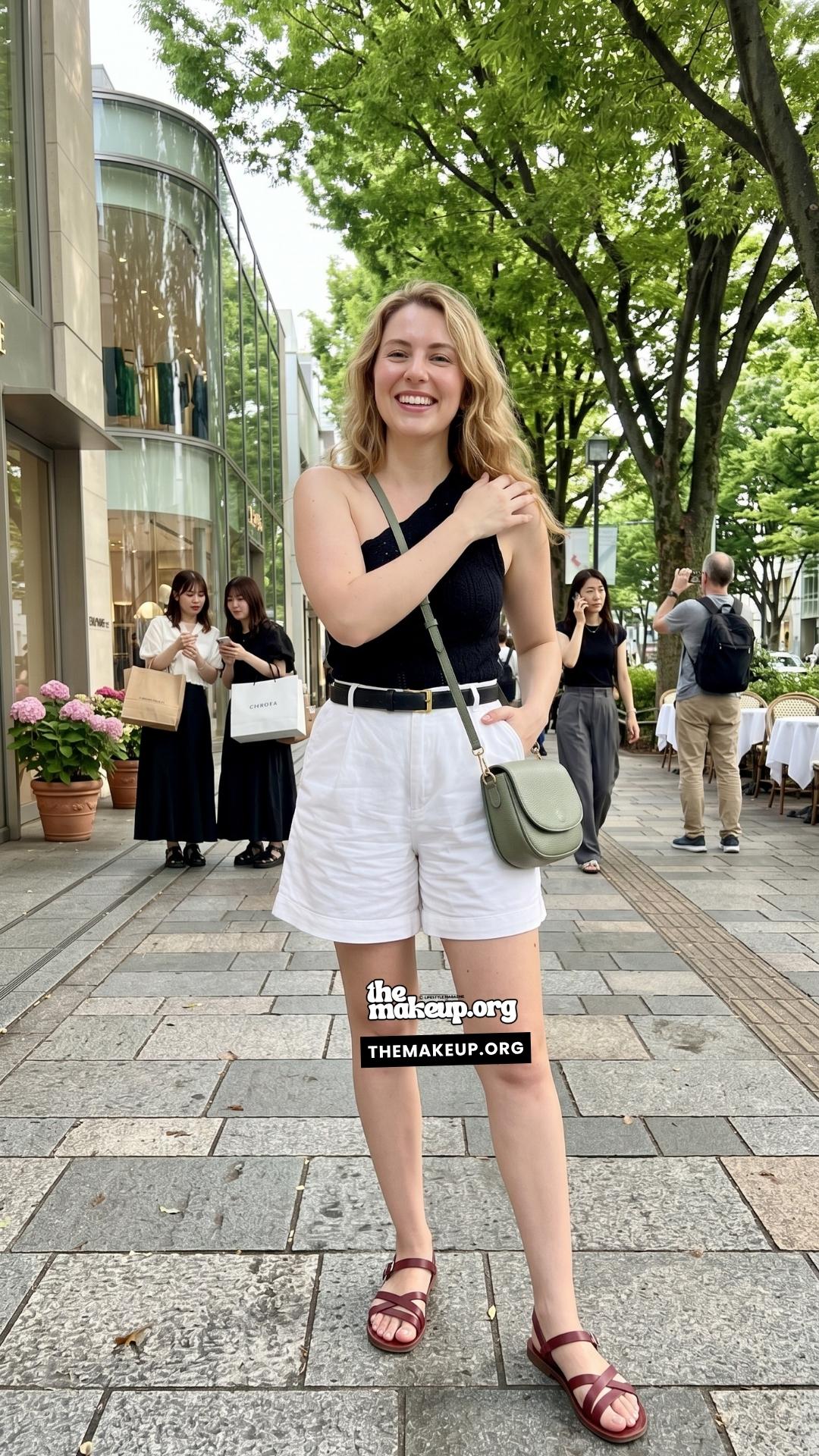
Most people favor neutral, soft shades in summer: off-whites, beiges, navy, and muted pastels are all very much at home here. It helps to have japanese color symbolism loosely in mind, though there are no strict rules for tourists. The overall style is reserved but fresh, focused on how things feel and move rather than what stands out most.
Subtle patterns are fine; bold graphic prints are less typical. Keeping your palette cohesive also makes packing easier, since fewer pieces can be mixed and matched into more outfits across a longer trip.
What to Wear to a Shrine or Temple in Japan
Shrines and temples are active places of worship, and dressed appropriately here is a small but meaningful act of respect. Covered shoulders and knees are generally expected, especially at busier or more formal sites. A loose shirt, midi skirt, or lightweight trousers will meet this standard without any extra effort.
If you are wearing a sleeveless top, keep that cardigan or scarf within reach. Removing your shoes before entering certain inner buildings is also common, so make sure your shoes are easy to slip off. Having this in mind before you set out will help you move through these sites without any uncomfortable surprises.
Daytime vs Evening Outfits 🌞🌙
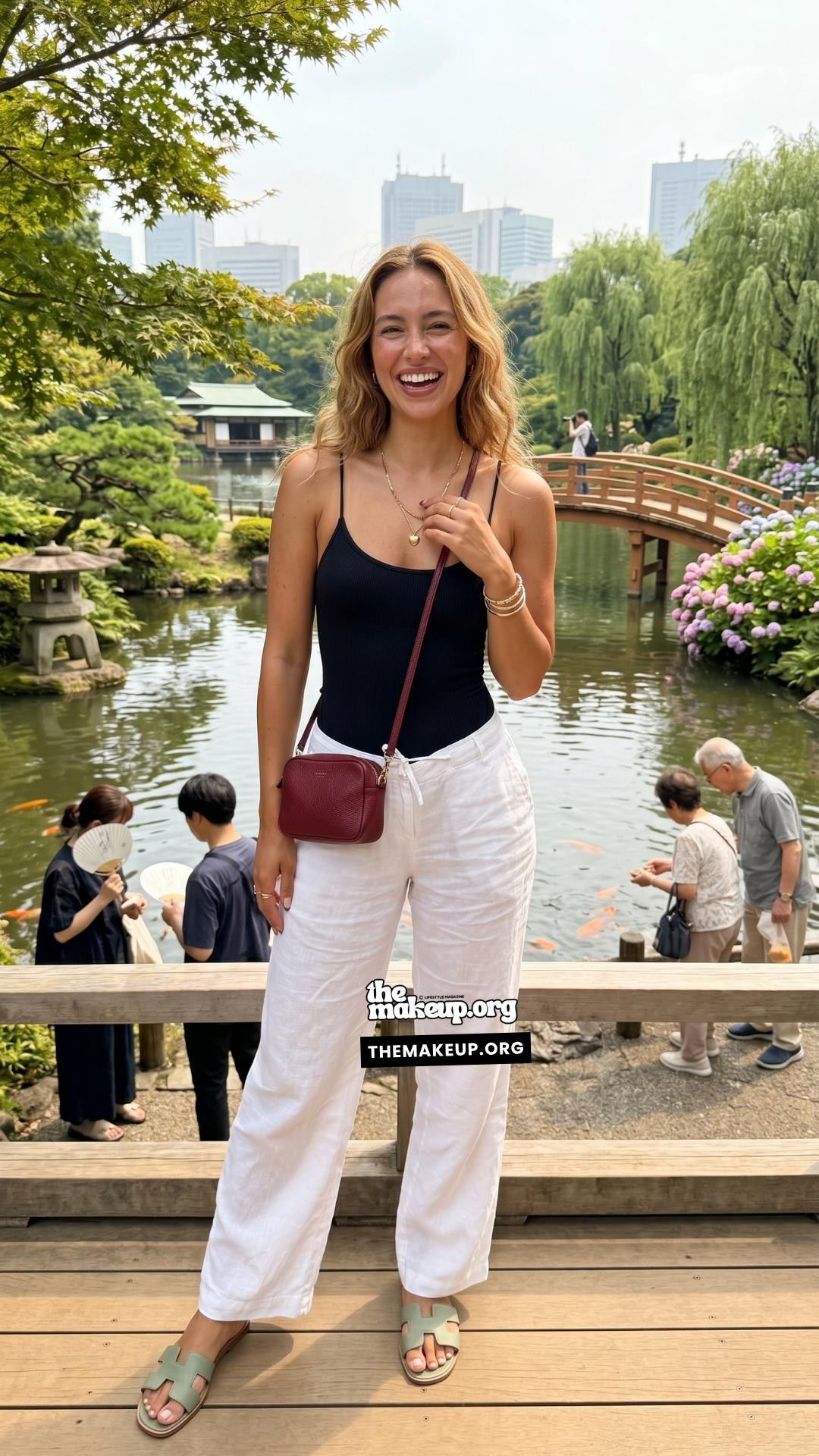
During the day, light layers and sun protection should be your priority. A hat, sunscreen, and a breathable top will carry you through even the most intense midday heat.
As evenings arrive, the temperature can ease and indoor spaces stay cool. Carrying a thin cardigan or scarf helps you transition from a long afternoon walk to a restaurant dinner without any discomfort. Most venues have a relaxed but tidy dress expectation, so a neat, comfortable outfit you have worn all day is almost always entirely appropriate.
Final Tips & Best Practices ✅
Dress for movement, shifting indoor climates, and the occasional summer shower. Keep layers light, focus on breathable materials, and let comfort shape your choices rather than trying to recreate an outfit from a city with different conditions.
Respect the local tendency toward neat, covered silhouettes and you will feel both comfortable and appropriately dressed throughout your time in Japan, whether you are in busy Tokyo or wandering quieter streets in Kyoto.
Final Outfit Checklist 📝
To put together what to wear in Japan in summer, start with light tops, loose trousers or skirts, and one or two thin layers that can be added or removed as the day shifts. Reliable shoes and a packable rain jacket or umbrella are wise for sudden weather changes, while a hat or scarf covers your bases for both sun and cool indoor settings.
Opt for cotton and linen, lean toward subtle shades, and let practicality shape your packing list. With these choices in place, you will move comfortably and confidently through Japan’s summer days and nights.
FAQ: What to Wear in Japan in Summer
What is the 3-3-3 rule for clothes?
The 3-3-3 rule for clothes is a packing method where you bring 3 tops, 3 bottoms, and 3 pairs of shoes for a trip. For a summer trip to Japan, it works well when you choose pieces that mix and match easily in neutral shades and breathable fabrics. It keeps your luggage light without leaving you underprepared.
What is the 5 minute rule in Japan?
The 5 minute rule in Japan refers to the cultural expectation of arriving slightly early rather than exactly on time or late. It applies to tours, restaurant reservations, and any scheduled experience. Being ready and presentable a few minutes ahead shows respect, which aligns naturally with the tidy, considered way locals approach dress as well.
Is $1000 enough for 1 week in Japan?
For a modest week in Japan, $1000 can cover food, local transport, and entry fees if you plan carefully. Accommodation and flights are separate. Shopping for clothing in Japan is genuinely tempting, particularly in Tokyo and Kyoto, where quality basics are widely available at reasonable prices if you need to supplement what you packed.
What is the 3-date rule in Japan?
The 3-date rule in Japan is a social concept suggesting that deeper commitment in a relationship typically develops after three meaningful outings. It is not directly related to travel dress, but the broader point about reading cultural expectations carefully applies to how you present yourself as a visitor as well.
What two colors should not be worn together in Japan?
There are no strictly forbidden color combinations for tourists in Japan, but certain shades carry cultural weight. White is associated with mourning in some traditional contexts, and all-black outfits can sometimes carry a similar connotation. Keeping your palette mixed and leaning toward soft, natural tones is a simple way to avoid any unintended signals.
What not to wear in Japan as a tourist?
Avoid overly revealing clothing, extremely short hemlines, and anything with loud graphic prints if you want to blend in comfortably. Heavy fabrics are impractical in the summer heat, and footwear that is difficult to remove quickly can cause frustration at certain indoor sites. Dressing neatly and covering your shoulders and knees at temples and shrines is a straightforward baseline.
What should women wear in Japan in summer?
Women visiting Japan in summer are most comfortable in loose, breathable pieces like linen trousers, midi skirts, and airy blouses. A thin cardigan, a packable rain jacket, comfortable walking shoes, and a small umbrella round out a practical summer wardrobe. Keeping silhouettes neat and coverage modest ensures you feel at ease in both tourist areas and more local neighborhoods.
Final Takes
What to Wear in Japan in Summer is ultimately about balance: staying cool in genuine heat while keeping a polished, covered silhouette that fits naturally into the local rhythm. Natural fabrics, thoughtful layering, and reliable footwear do most of the heavy lifting.
Pack light, build around neutral shades, and keep a layer and a small umbrella within reach at all times. That combination will carry you comfortably through every kind of summer day Japan offers, from a shaded temple courtyard to a lively city evening.